The benchmark in short-term measurements since 1999
In 1999, DATOGRAPH ushered in a new era for making short-term measurements more complex, with a newly manufactured gauge, newly designed from scratch, and a unique dial design.
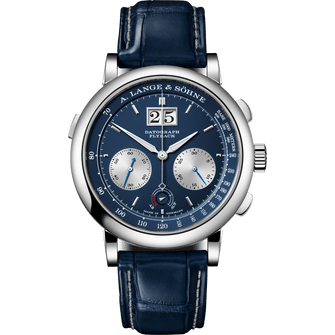
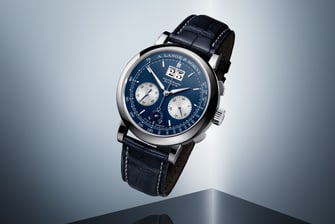
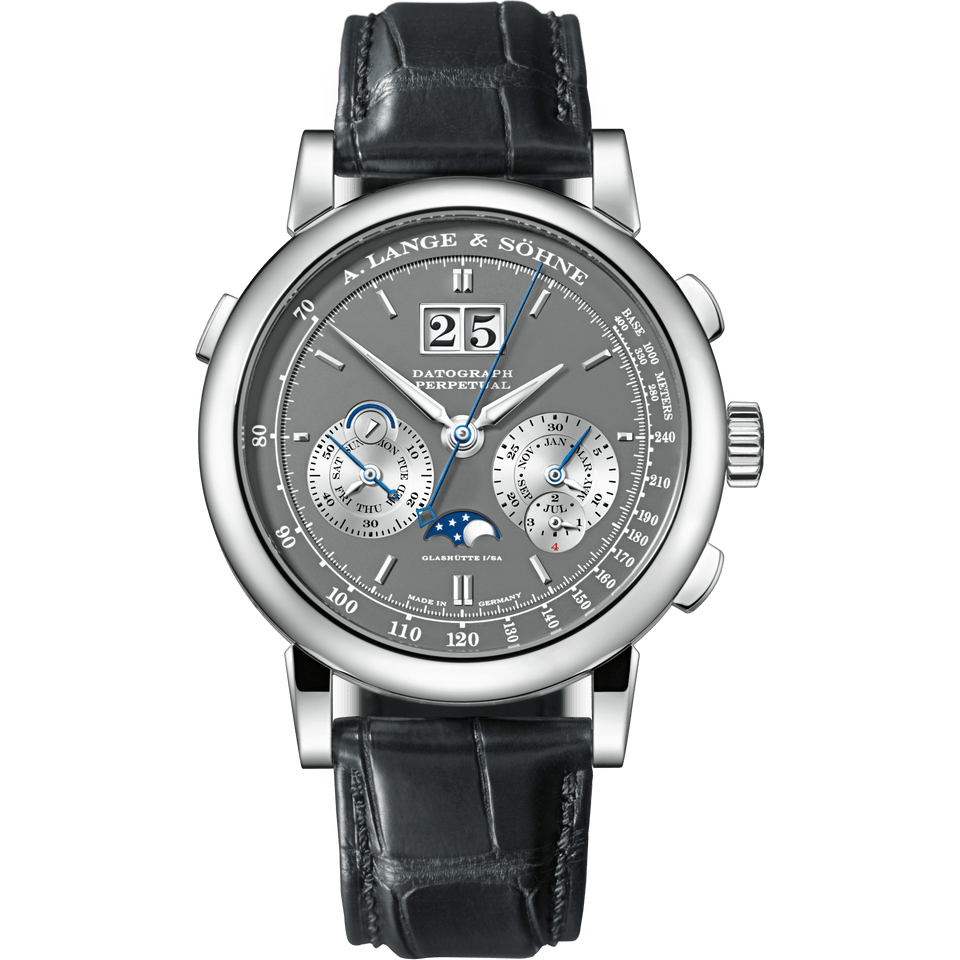
To celebrate its 25th anniversary, the ground-breaking chronograph is now available as an 18-carat white gold DATOGRAPH UP/DOWN model with a blue dial limited to 125 hours.


A refined beginning
This marked the birth of an innovative concept: in 1999, just nine years after the brand’s restoration, A. Lange & Söhne introduced the DATOGRAPH, which features their very first chronograph piece. The L951.1 calibre, newly developed in Saxony manufacturing, combined a classic flyback chronograph with a precise minute counter and a typical Lange date. At a very early stage, the DATOGRAPH movement revealed the ambitions of the Glashütte production to expand the watch boundaries and explore new ways.
The DATOGRAPH was the prelude to a number of currently 13 innovative models with chronograph function. Among them is the L951.6 DATOGRAPH UP/DOWN caliber: introduced in 2012, it has consistently evolved with an increased power reserve of 60 hours and a power reserve indicator.
Exceptional engineering
With its departure mechanism, accurate minute counter, recapitulated date, and power reserve indicator, DATOGRAPH UP/DOWN is in a league of its own.
Since the three switching steps are performed at the touch of a button, the departure mechanism allows for two quick sequential time measurements, with virtually no delay between them. The chronograph stops, resets to zero, and starts again in an instant. This so-called speed shift function was often used in early aviation.
The precisely jumping minute counter also lives up to its name: it jumps to the next increment at the very moment when the chrono’s second hand completes the 60th second.
Check the chronograph function
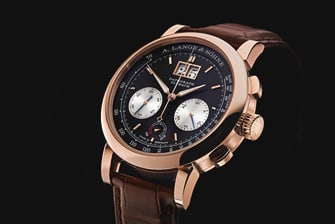
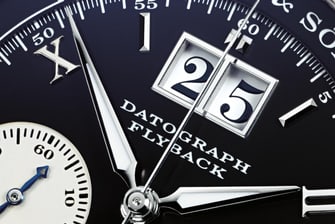
A. The Lange & Söhne oversized date allows you to use numbers that are about three times larger than in watches of comparable size. This innovation not only makes the date much more legible, but also simplifies the setup process, because the date is not adjusted with the crown, as it usually is. Instead, it can be conveniently advanced day by day with a push of a button. An oversized date consists of two separate display elements: a disk of units and an intersection of tens. To correctly reproduce the date sequence, the disk and the cross must advance at irregular intervals.
The “UP” attribute/DOWN” refers to the 6 o’clock power reserve indicator, which provides information on how much of the 60-hour power reserve is still available. No later than the third day, when the hand turns to the red part, it’s time to wind up the watch.
Stylish elegance with clear design
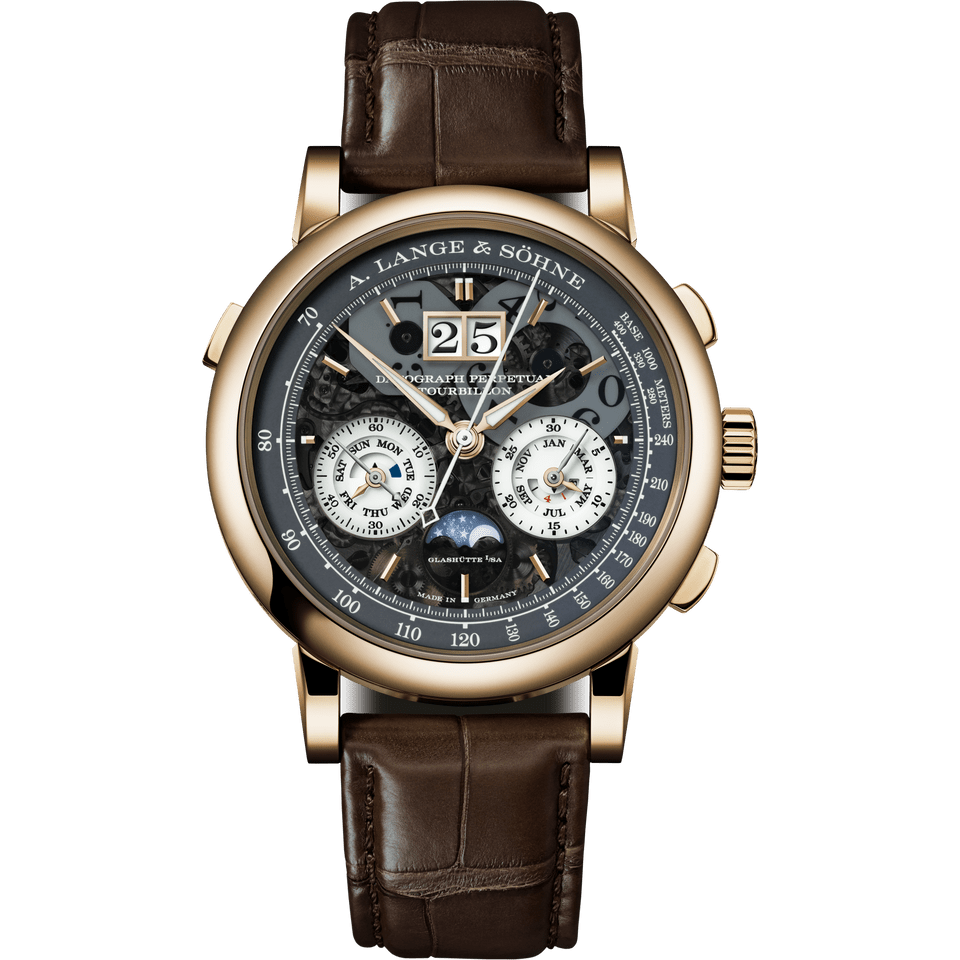
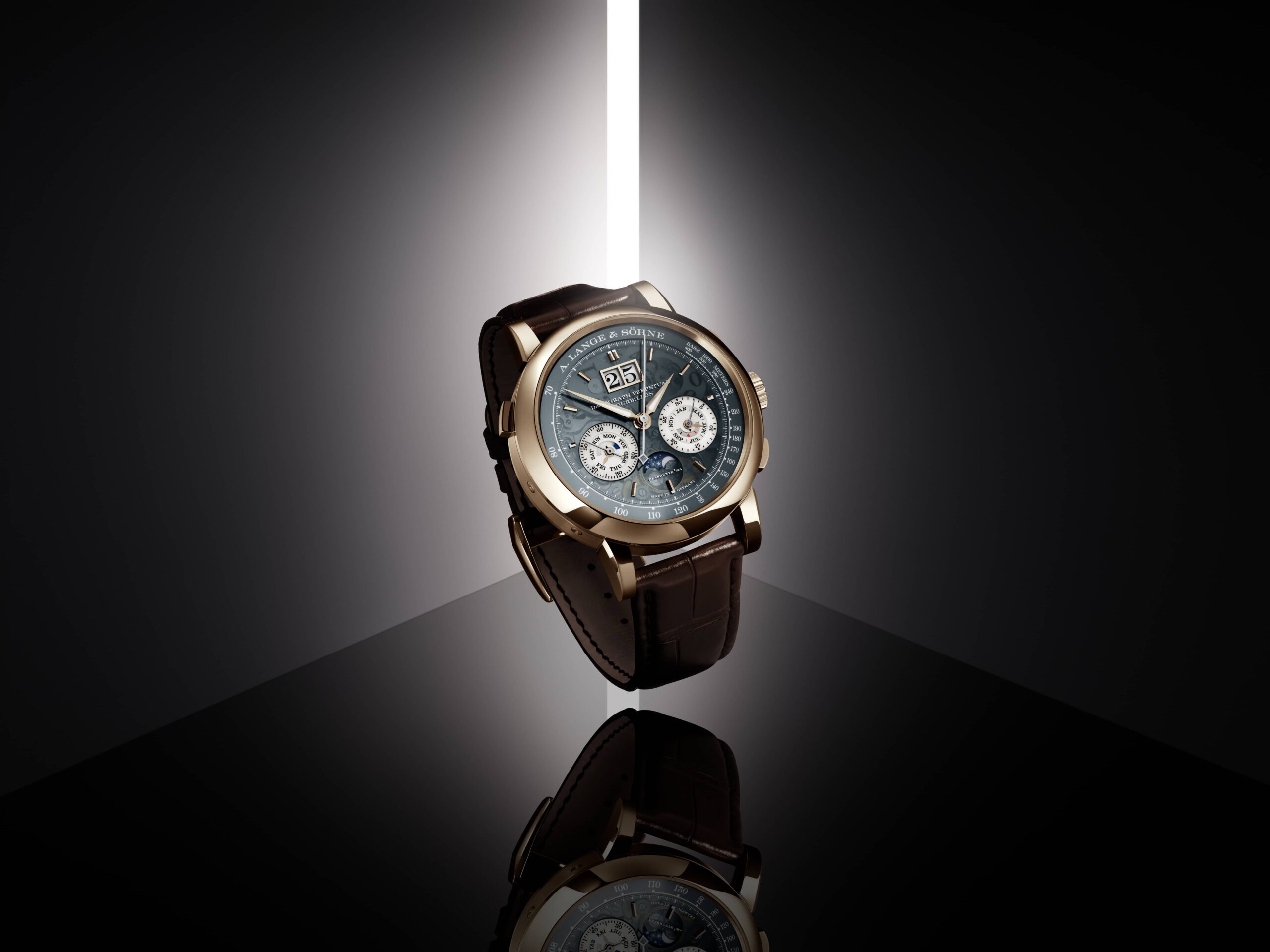
Thanks to the harmonious dial configuration, the DATOGRAPH UP/DOWN is easy to identify at a glance. The two-pointed date aperture at 12 o’clock indicates the tip of an equilateral triangle. The auxiliary dials for the small seconds at 9 o’clock and for the precise jumping minute counter at 3 o’clock are located below the horizontal central axis of the dial, forming the base of a triangle. The characteristic, axially symmetrical design of the dial ensures optimal readability.
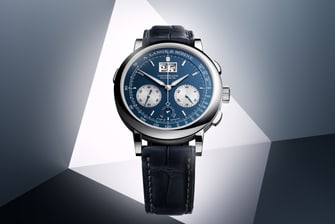
For the first time, the limited edition DATOGRAPH UP/DOWN has a blue dial: the rhodium-colored auxiliary dials, luminous hands and hour markers contrast sharply with the elegant blue hue.

Production of the L951.6 caliber
The L951.6 manual calibre ‒ consisting of 451 parts, assembled twice and finished in typical Lange style ‒ breathes life into the DATOGRAPH UP/DOWN. With its technical sophistication, sophisticated architecture, and superb finishing, it sets the benchmark in engineering and aesthetic appeal.
The classic column-wheel chronograph with a freely oscillating balance spring and a balance with eccentric weights beats at a frequency of 18,000 half-vibrations per hour (2.5 hertz) and allows you to measure time with an accuracy of one fifth of a second. For example, through the sapphire crystal back, you can admire the minute counter mechanism and the column wheel that controls the start and stop sequences.
The exceptional technical sophistication of the movement is combined with superb craft excellence. The sharp internal angles of the movement parts, which can be found, for example, in the clutch rocker of the chronograph mechanism, deserve special attention. It takes remarkable dexterity and experience to achieve this high degree of perfection. Other traditional elements of this micromechanical work of art include bridges made of raw German silver, a hand-engraved balancing member with a whip spring, thermally strangled screws, and four screwed-on gold chatons.

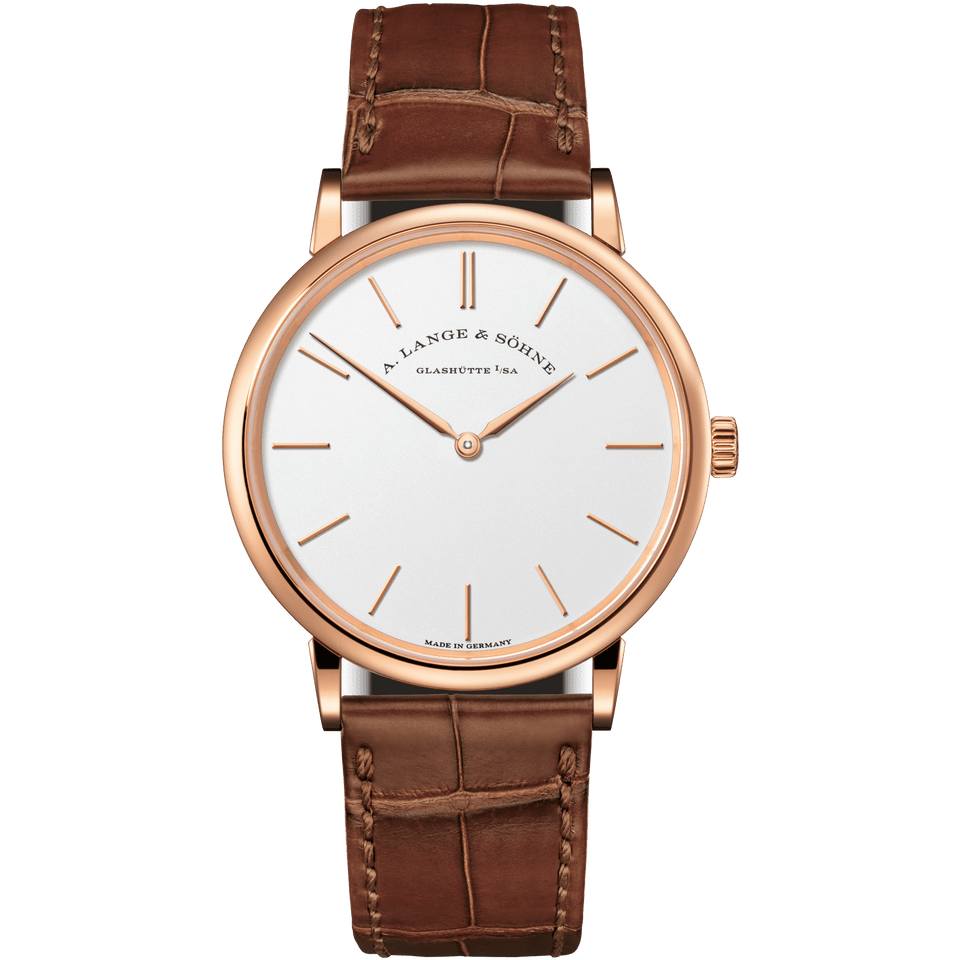
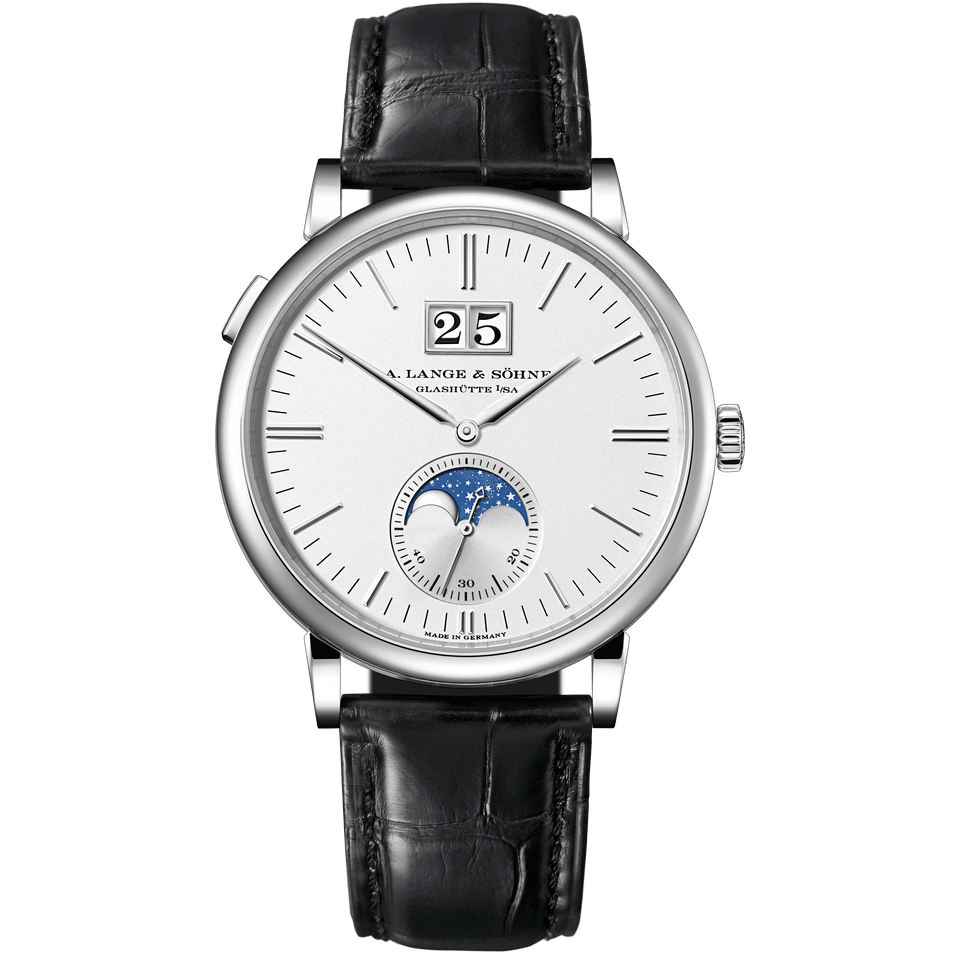
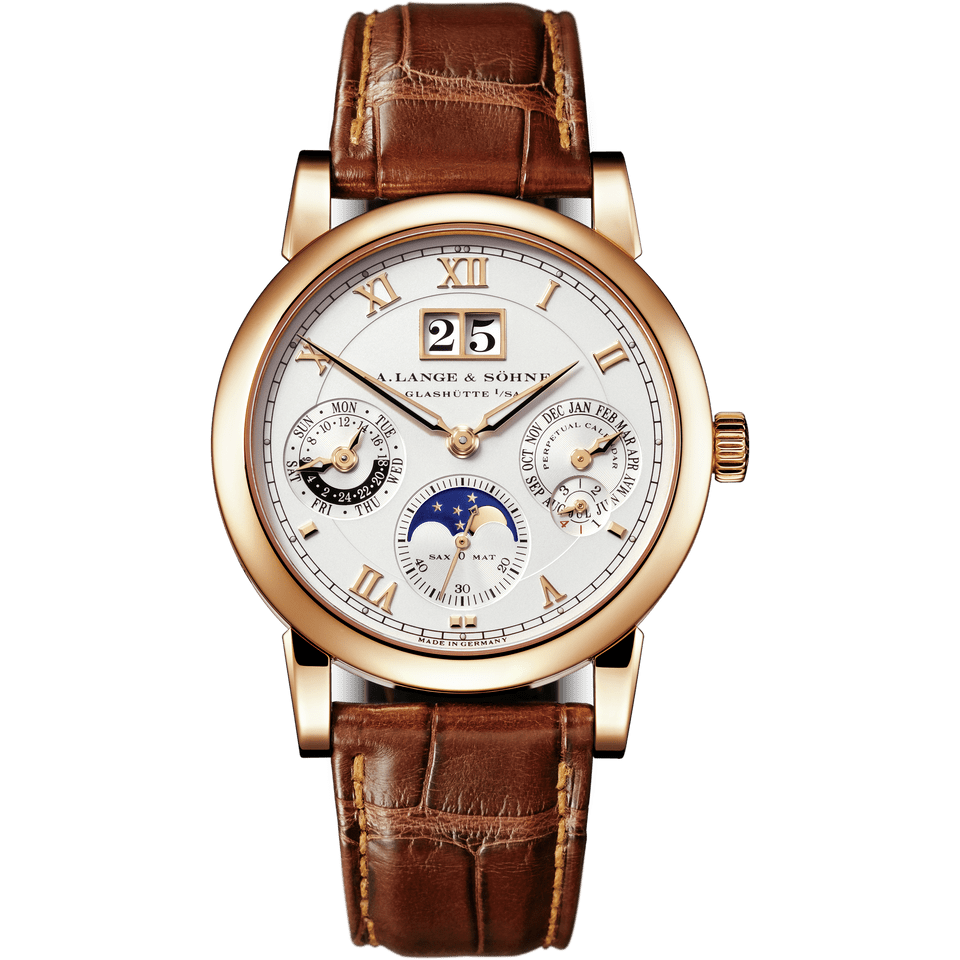
SAXONIA Models


- A. Lange & Söhne
- Audemars Piguet
- Bovet
- Breguet
- Breitling
- Bvlgari
- Cartier
- Chanel
- Chopard
- Damiani
- De Bethune
- De Grisogono
- Diamond
- Frederique Constant
- Gerald Genta
- Girard-Perregaux
- Greubel
- Hublot
- IWC
- Jacob & Co.
- Jaeger-LeCoultre
- Louis Moinet
- Omega
- Panerai
- Parmigiani
- Patek Philippe
- Piaget
- Richard Mille
- Roger Dubuis
- Rolex
- TAG Heuer
- Ulysse Nardin
- Vacheron Constantin
- Van Cleef & Arpels
- Zenith
- Reviews