It’s no secret that the longest-playing watch in the Omega brand’s history is the Seamaster collection, which debuted back in 1948. However, this collection is not homogeneous. It includes several product lines, the youngest of which is the Seamaster Planet Ocean line. The first model in this series was released back in 2005, and since then Omega has updated its most modern and powerful diver twice. This year, for the 20th anniversary of the line, the company introduced the 4th generation Seamaster Planet Ocean, which is radically different from the previous 3.
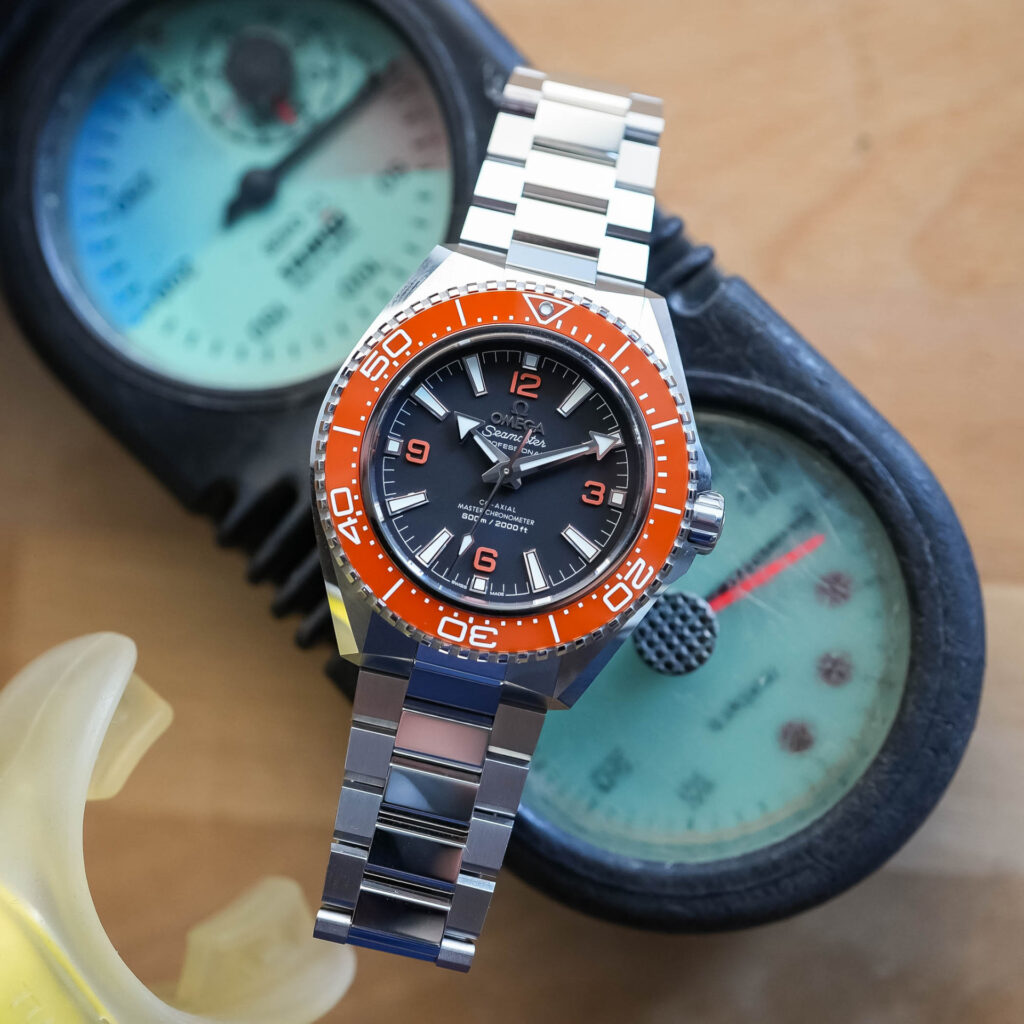
If you look at a random model from any generation of the Seamaster Planet Ocean, you can see that this watch is, in fact, an improved version of the Seamaster Diver 300M. Well, or they have at least the same source of inspiration – the models of the 1960s. Since its introduction, the Planet Ocean watch has been characterized by such features as
- slightly asymmetrical body;
- curved lyre-shaped ears typical of Omega;
- crown slightly recessed into the body ring with a curved polished bevel;
- wide arrows in the shape of classic arrows;
- trapezoidal overlay markings that alternate with embossed Arabic numerals;
- wide diving bezel made of a variety of materials;
- branded helium valve at the “10 o’clock” mark;
- a bracelet or strap connected to the case with classic rounded links – and all this is often with orange accents in the design.
With new products in the amount of 7 pieces, we are offered to forget almost everything that we have seen in the last 20 years. The new generation of Omega technical divers has received more angular and masculine features, and with them more reasonable proportions. According to the company, the Seamaster models of the 1980s became the source of inspiration for the creation of these watches.
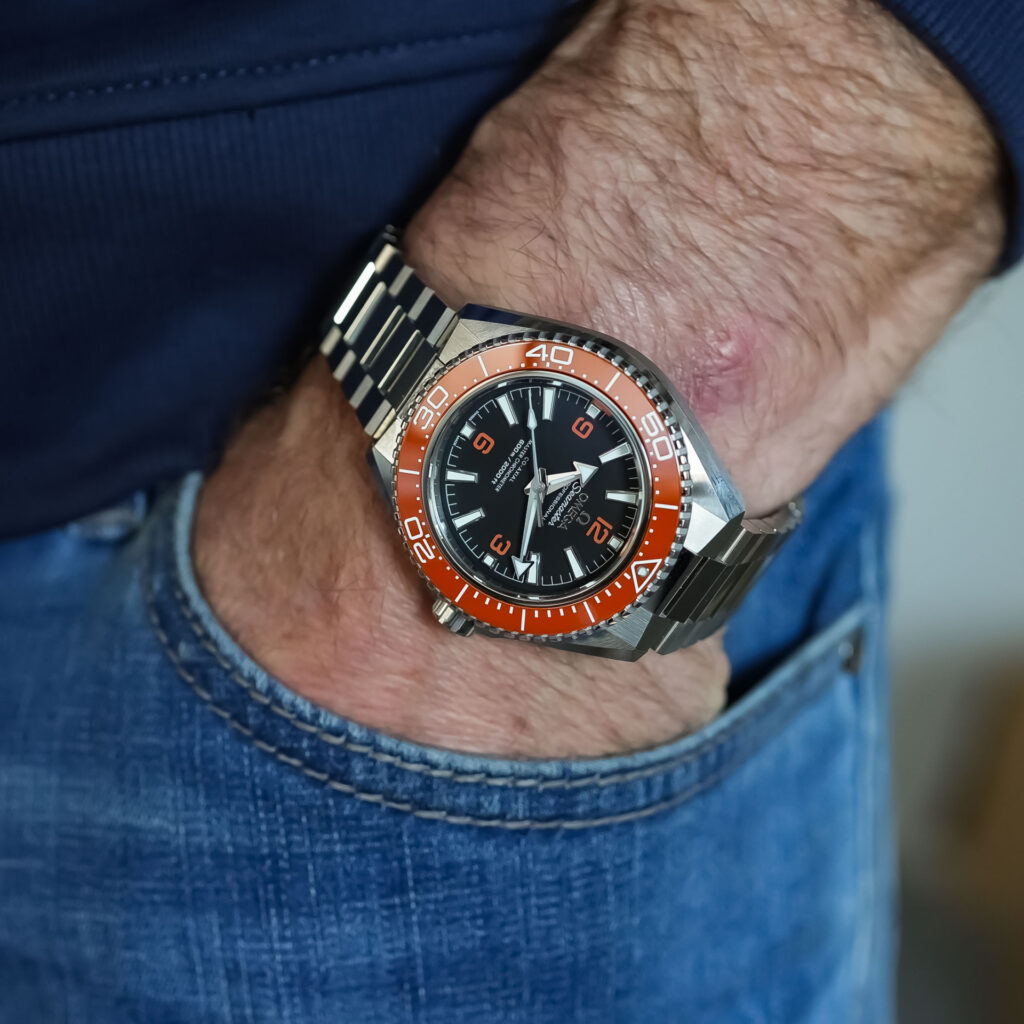
The first thing that is important to note is that the long-outdated helium valve has disappeared, which is sure to provoke a heated discussion on social networks. There are no more lyre-shaped ears. But around the glass, on the inside of the bezel, the new watch has a titanium ring.
Interestingly, such a ring was an aesthetic touch in the design of both the 2005 Planet Ocean models and the vintage Seamaster 300 from the 1960s. In the new watch, this element has not only an aesthetic, but also a functional load associated with the sealing of the case. By the way, the usual 600-meter water resistance for the Seamaster Planet Ocean has been preserved.
A detail that fans of this line will appreciate is the return to the original 42 mm diameter. The case thickness is now 13.8 mm, which is as much as 2.3 mm less than the previous generation models. As noted above, the shape of the case has become more angular, and the bracelet is now connected to it using a shortened first link. A flat sapphire crystal instead of a domed one gives a thinner profile. In general, the updated Omega divers should sit as comfortably as possible on most wrists.
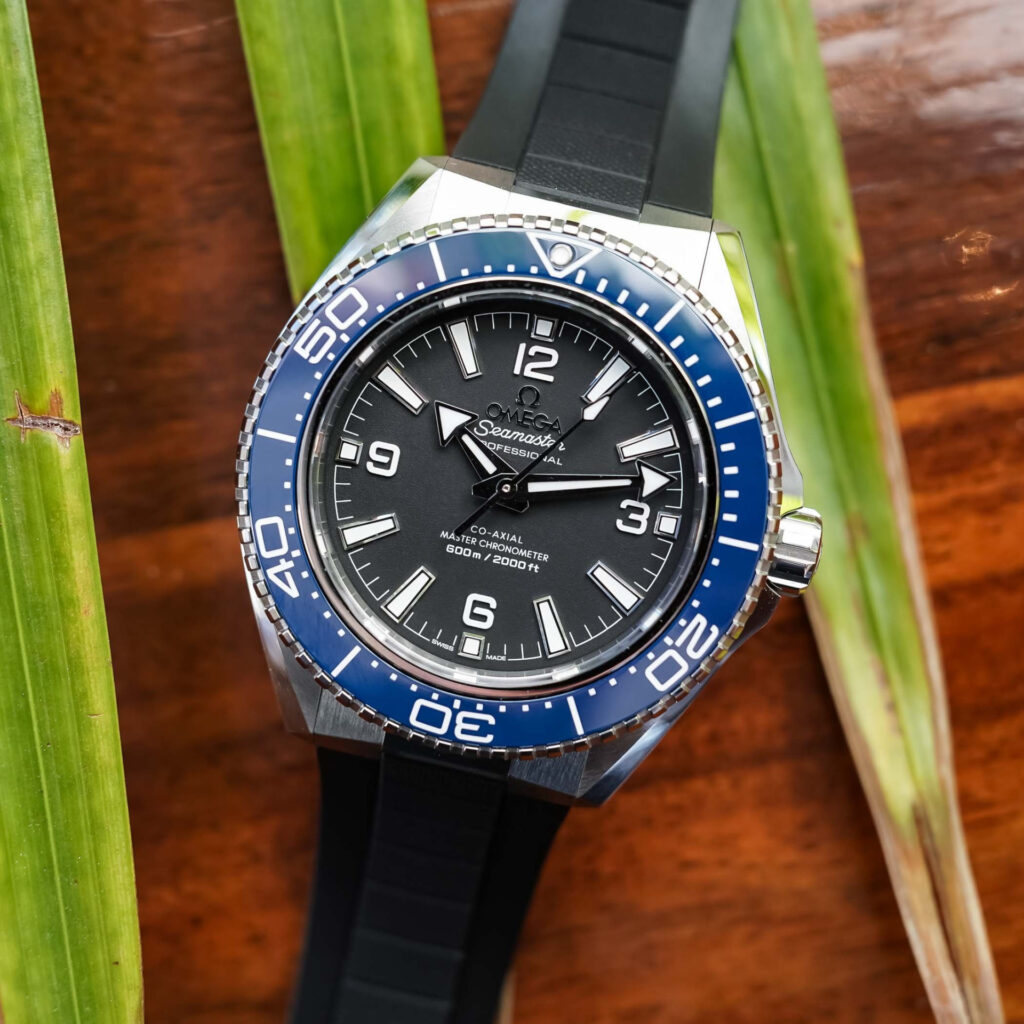
The changes also affected the watch’s bezel. It now has a more pronounced jagged profile and a wide ceramic insert with a simplified diving scale. The insert is available in black, blue and, of course, orange, which has become the signature color of the collection since its debut in 2005.
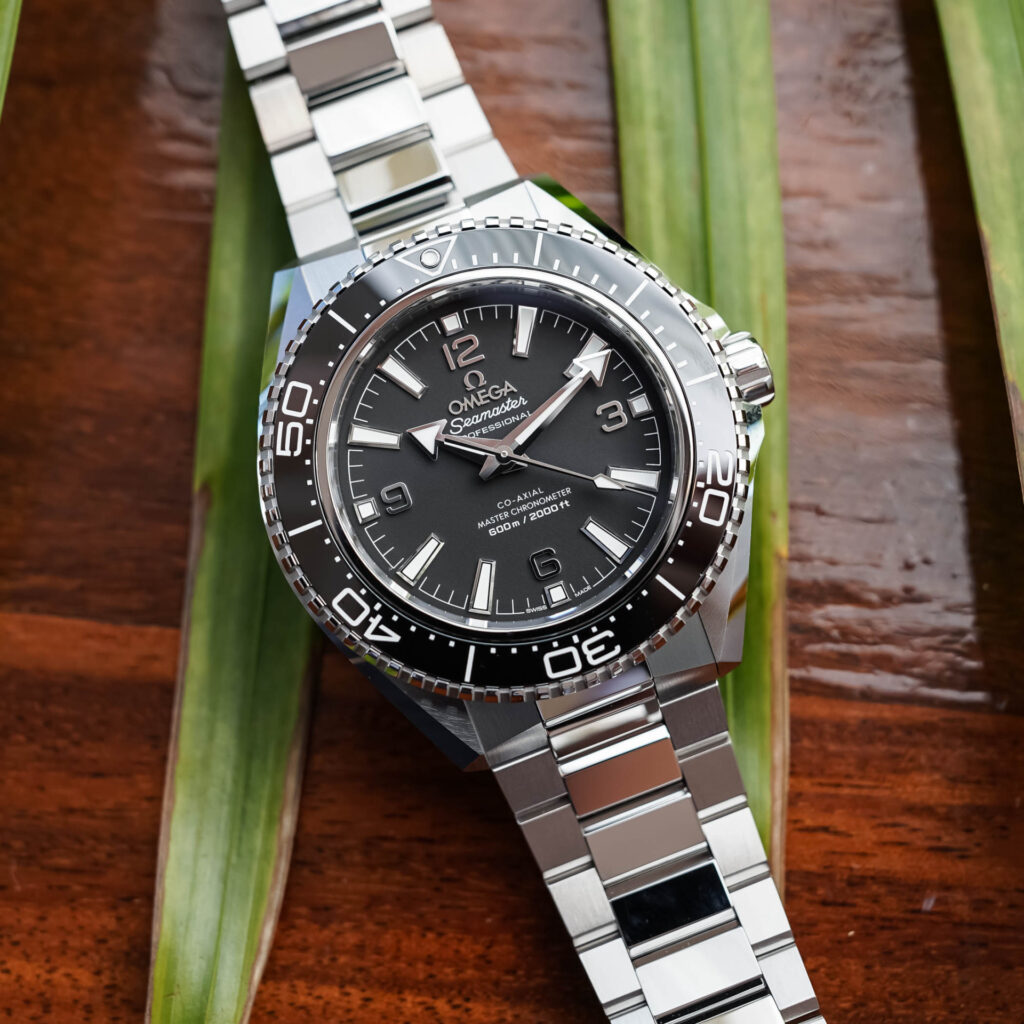
If the case and bezel in the new models have changed dramatically, then the dial is more about the evolution of design than about revolution. It is matte black with slightly larger, but still the same arrows and slightly enlarged trapezoid-shaped overlays. All of this is processed by Super-LumiNova. As before, the hour markers alternate with Arabic numerals, which are located on the cardinal directions. It is the almost untouched dial that creates the recognizable image of the Seamaster Planet Ocean.
Despite the major external upgrade, there are no surprises inside the case. The watch’s operation is provided by the Omega 8912 automatic calibre, which the company has already used in special Seamaster Planet Ocean watches with the Ultra-Deep prefix. This is a certified chronometer with a coaxial trigger, operating at a frequency of 25200 pcs/hour. Two wind-up drums provide this mechanism with a 60-hour power reserve. The convenient option of changing the hour hand in increments of “1 hour” without affecting the operation of other hands allows you to use the clock in other time zones.
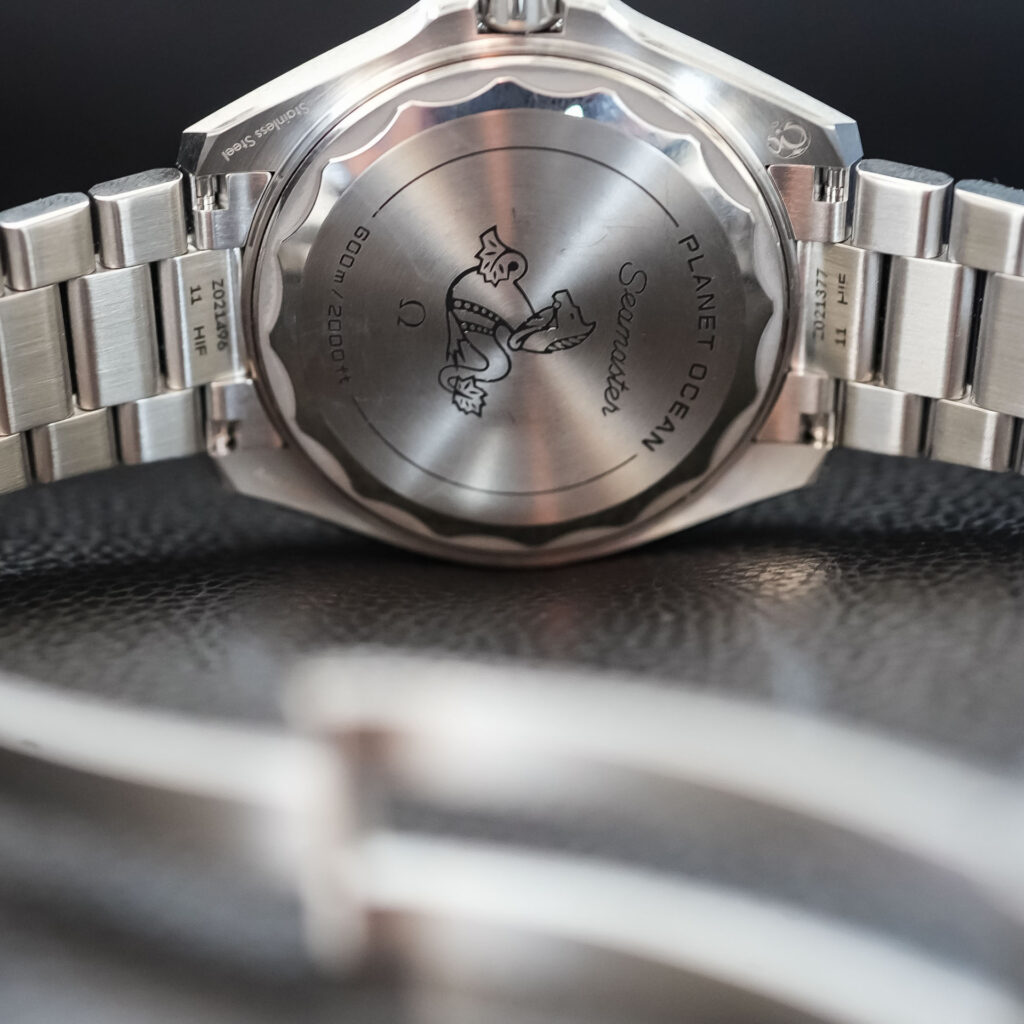
It is suggested to wear watches on steel bracelets or rubber straps. The straps are attached to the body using a steel link, which gives a sense of design integrity. Only a folding fastener without a micro-adjustment mechanism can upset here.
The bracelet is now flat, three-link, with brushed outer and polished inner links. It has become thinner and, due to the first hinge link, is visually perceived as integrated into the body. The bracelet is fastened with a folding clasp adjustable in 6 positions. As it should be in the case of divers, it is equipped with an extension mechanism so that the watch can be worn over a diving suit.
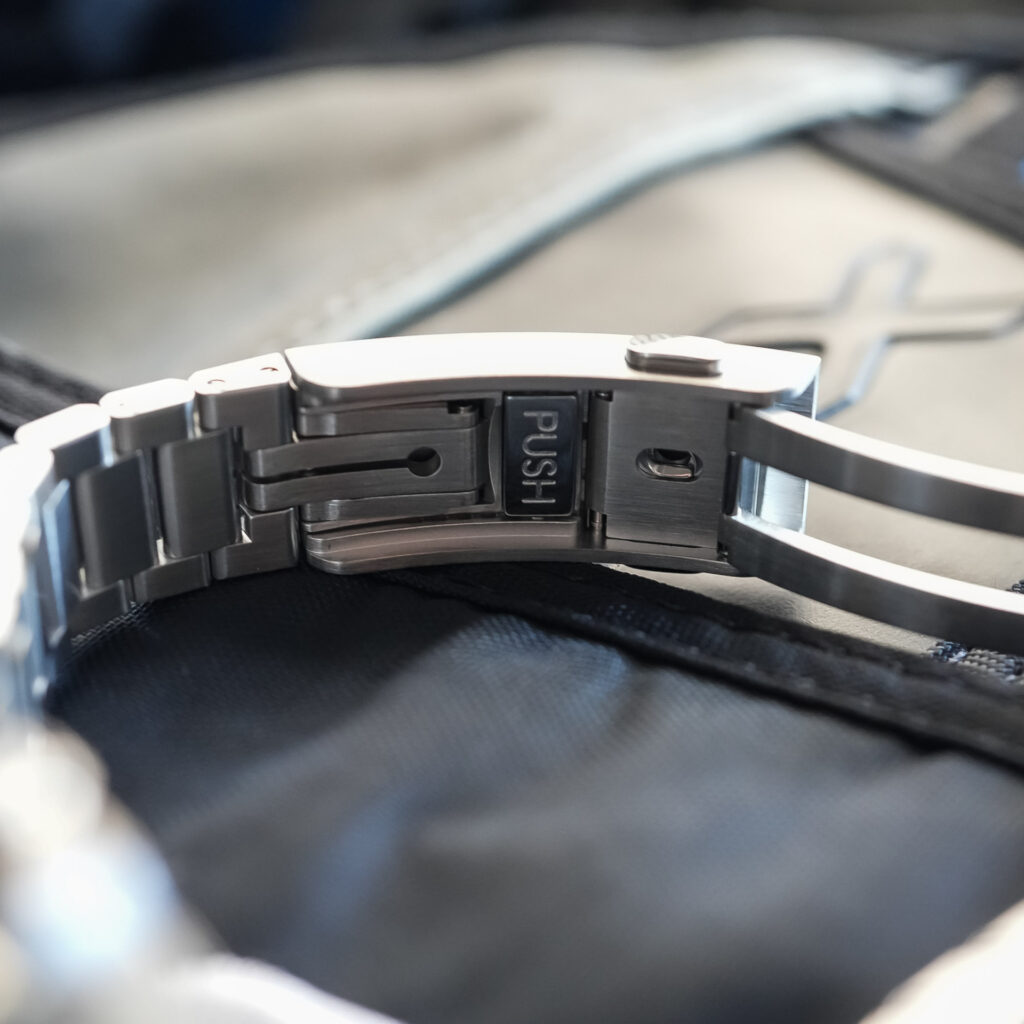
New Seamaster Planet Ocean items will be included in the permanent collection. Depending on the color of the bezel (black, blue or orange) and the availability of a strap or bracelet in a particular model version, the estimated cost of the watch varies from CHF 6,700 to CHF 7,400 (excluding taxes).
- A. Lange & Söhne
- Audemars Piguet
- Bovet
- Breguet
- Breitling
- Bvlgari
- Cartier
- Chanel
- Chopard
- Damiani
- De Bethune
- De Grisogono
- Diamond
- Frederique Constant
- Gerald Genta
- Girard-Perregaux
- Greubel
- Hublot
- IWC
- Jacob & Co.
- Jaeger-LeCoultre
- Louis Moinet
- Omega
- Panerai
- Parmigiani
- Patek Philippe
- Piaget
- Richard Mille
- Roger Dubuis
- Rolex
- TAG Heuer
- Ulysse Nardin
- Vacheron Constantin
- Van Cleef & Arpels
- Zenith
- Reviews