Twenty–eight grams is so small and light that it is even difficult to feel this meager weight with your eyes closed. But looking at the palm of your hand, you can mistake the watch for a figment of your imagination, they are so weightless. Richard Mille RM 009 is the lightest mechanical watch in the world. Their body is made of an aluminum-silicon alloy, born inside a centrifuge to create components for deep space exploration.
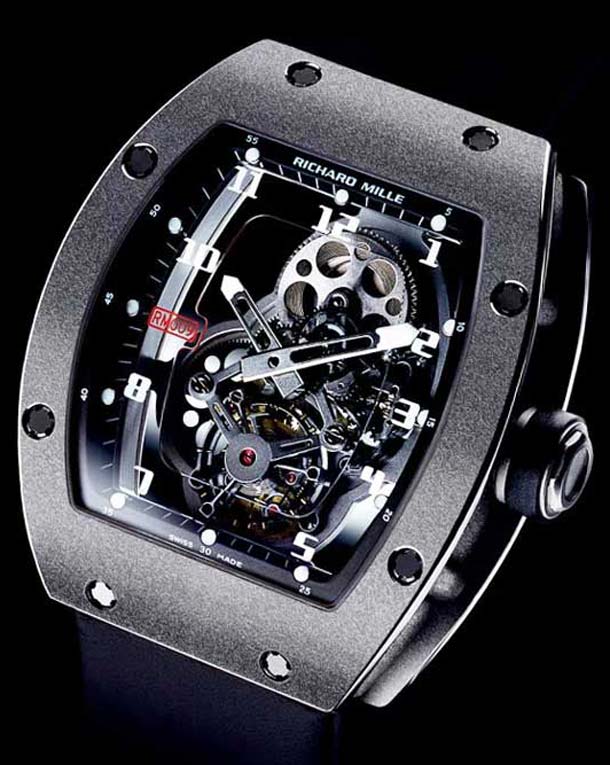
The uncouth, rough beauty of the hull negates any perception of luxury. The extensive labor and incredibly high costs associated with the manufacture of this clunky case make it the most expensive single element ever created in watchmaking.
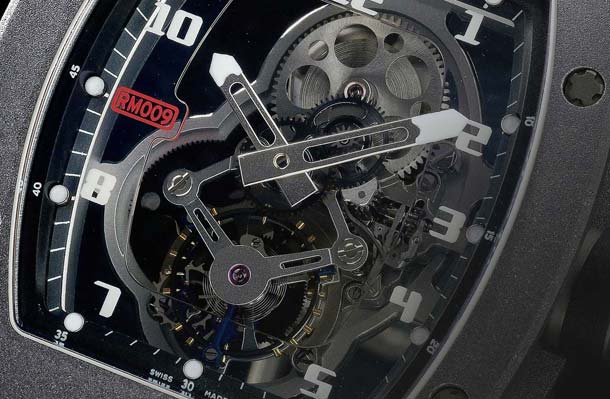
The skeletonized mechanism catches the eyes and directs them inside the architecture, revealing a futuristic frame created from a seemingly impossible fusion of metal and lithium. Here, stereotypes are broken, and there is a chance to abandon the association with old, heavy materials for the manufacture of the case, such as gold, platinum or tantalum. A world of speed opens up, where the highest level of productivity prevails.
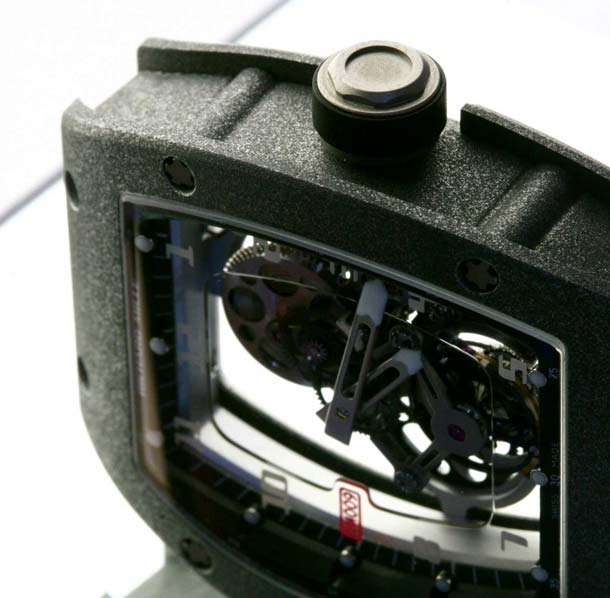
By creating new material Richard Mille illuminates the firmament of the luxury world with the light of a supernova. In this world, a tourbillon watch is worn by a Formula 1 pilot who has superhuman loads; the watch can be thrown into a wall and there will not be a scratch on it; the descent of the tourbillon will remain intact after falling to the ground, because its bridge is created in the form of a suspended triangle in a racing car. Welcome to the world of RM 009.

Why create the lightest mechanical wristwatch in the world? “Because in the world of auto racing or professional sports, light weight is equivalent to high performance,” says Richard Mill. Mille’s goal is to ensure that in any racing car, whether it’s an F1 car or a motorboat or even a racing bike, optimal performance is achieved by maximizing power while minimizing body and chassis weight. F1 engineers spend millions every year trying to shave grams off every component in their cars. Mille wanted to translate this sense of high performance into an incredibly lightweight but completely shockproof tourbillon that F1 driver Felipe Massa could wear in the new season as part of the Ferrari team. RM 009 weighing 28 grams is really a watch that its owner can wear during any activity – running, cycling, climbing, whatever. Richard Mille was not interested in Felipe Massa wearing his watch to special events, he wanted to create a model that Massa would wear directly during the race.

Most of the mass of the watch is related to the material of the watch case. The first step for Richard Mille in creating the lightest wristwatch in the world was to find a new material. One of the lightest but most resilient materials in the world is aluminum, which has a much higher strength-to-weight ratio even than titanium. In addition, aluminum is corrosion resistant, relatively easy to work with, and can be polished. Modern production of aluminum alloys is widely used in high-tech production. It’s used in everything from bike frames racing in the Tour de France to the skeletal construction of the V8 Vantage Aston Martin. The Aston Martin DBR9 in the DB9 racing version has an aluminum frame and an engine with carbon fiber panels for a rigid and lightweight construction.
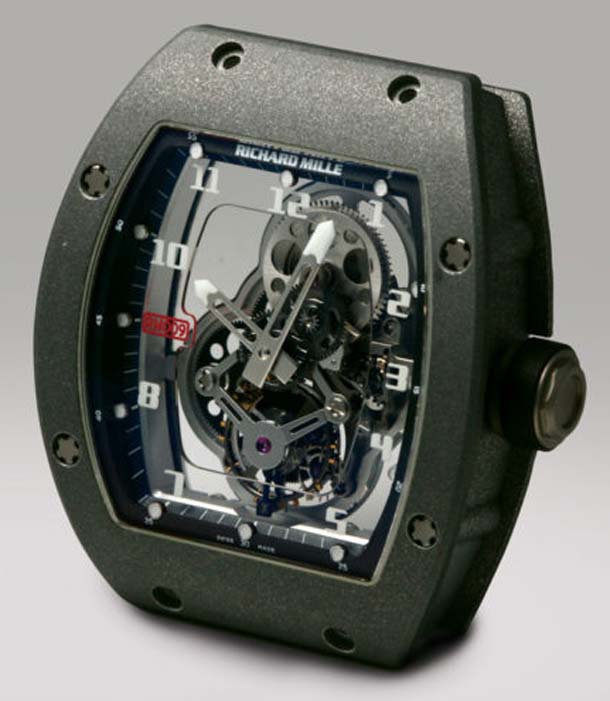
However, aluminum has disadvantages that make it unsuitable for use in a watch case. Firstly, aluminum is subject to fatigue. Aluminum slowly loses mass over its lifetime as the molecules turn to gas. Over time, aluminum weakens. In the automotive industry, engineers circumvent this by developing high-strength components, but this loses the advantage of the critical weight of aluminum. In addition, the car frame is protected from direct impact with the road by shock absorbers, while the watch has a daily direct impact on the body. Professional racing bikes are only used for a maximum of one or two seasons and then discarded before the aluminum defect shows up, but the watch is designed to last as long as possible. Watches should be passed down from one generation to the next.
While conducting his research, Mille discovered more disadvantages regarding aluminum. Although aluminum is strong, its surface is soft. Surface hardening using anodizing (heat treatment) creates only an outer shell that is hard, which can still scratch with a strong impact. There was no normal aluminum to meet Richard Mille’s needs. It was through his contacts in the aerospace industry that Richard Mille obtained the special high-density carbon fiber used in Airbus brake discs, which he eventually used for carbon base plates in his mechanisms, and it was through these same contacts that he first heard about ALUSIC, a material used for space technology. ALUSIC was created at Les Bronzes d’Industrie (LBI) in Amneville, France. Luc Lajoie, co-owner and general manager of LBI, conducted his metallurgical research at Génie Physique et Mécanique des Matériaux in Grenoble. It was during his doctoral studies that the ideas leading to the invention of ALUSIC were developed. “ALUSIC is a mixture of aluminum and silicon from a metal and a mineral, resulting in an extremely lightweight material that has high impact resistance, hardness and stability,” explains Mill.
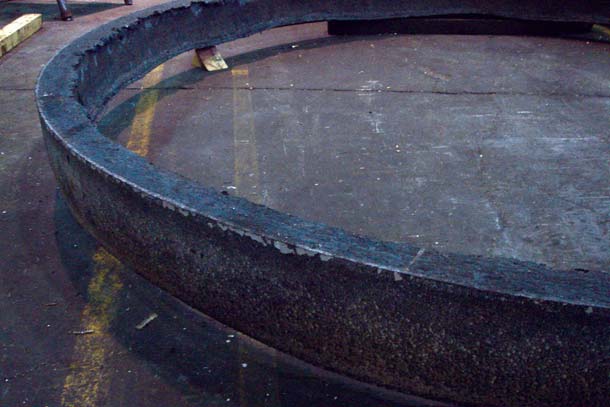
ALUSIC had one drawback: due to the complex manufacturing process, it was excessively expensive. However, Richard Mille simply had no other choice. He admits, “Every time I reach a point where I can choose among different options, I will always work with only the best, regardless of the costs. It’s my philosophy to never compromise.” The ALUSIC needed to create the RM 009 watch will cost several times more than platinum. Indeed, the Richard Mille watch case from ALUSIC turned out to be the most expensive watch case in the world. The main task is to fuse the seemingly incompatible elements of metal and mineral. ALUSIC must be created using centrifugal force to ensure the bonding of aluminum and silicon at the molecular level.
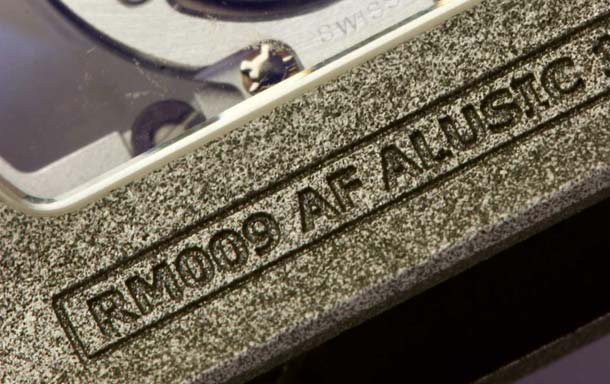
Lajoie explains, “The biggest problem with these types of alloys is the inherent metal mixture, which by its very nature must contain impurities. These impurities damage the structure. However, during centrifugation, unwanted material remains in the core of the distribution process, and the ideal matrix is ejected into the outer area. The particles added to the metal mixture are also evenly distributed in a similar way.” Thus, ALUSIC rotates inside a high-speed centrifuge, resulting in a massive cylinder. The inner part of the cylinder remains a pure aluminum body, and only the outer layer of the cylinder is ALUSIC. This outer layer is carefully processed, and the RM 009 body is created from it.
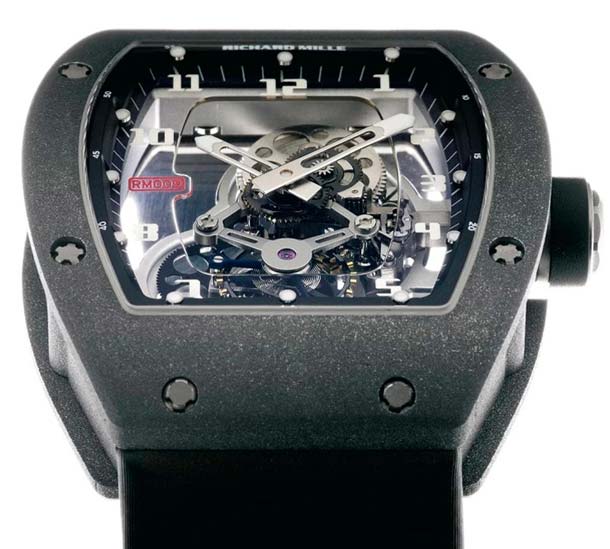
When the process is completed, only a piece of metal remains, which cannot be bent, rolled, or punched, as it is solid. “In the design of the Richard Mille watch case, everything is curved. Everything. Each part, each section, the upper, middle and back parts of the case, must be cut out to fit the shape. This means that the curved front and back of the case, each only a few millimeters thick, must be cut in the same way as a piece of salami, but in a curve! And after that, they should come together perfectly.
More malleable metals allow for some correction, but ALUSIC is completely unforgiving,” he says. When Lajoie discusses ALUSIC’s processing, he groans and rolls his eyes, “Actually, it’s a real nightmare to drill this stuff. It is so difficult that it cannot be cut with ordinary stamps. We had to use a special diamond tool with one tooth. Usually, such a tool would make 10 to 15 holes, but in this situation it often broke after only two holes were drilled.”
The visual and tactile feel of the RM 009 case is breathtaking. It doesn’t look like a metal or a mineral, but it looks and feels like it’s carved out of a solid piece of space rock. Pick it up and you’ll be impressed that such a large body is almost completely weightless. How durable is it? From a scientific point of view, the mechanical properties of ALUSIC are as follows: very high rigidity, exceptional wear resistance and unsurpassed performance even at temperatures up to 300 °C.
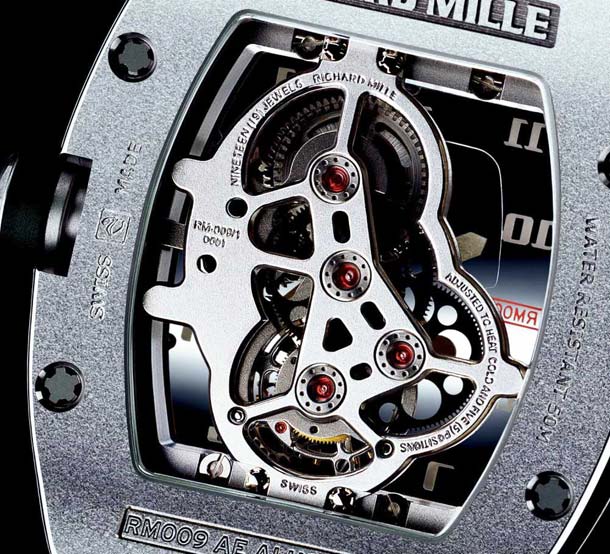
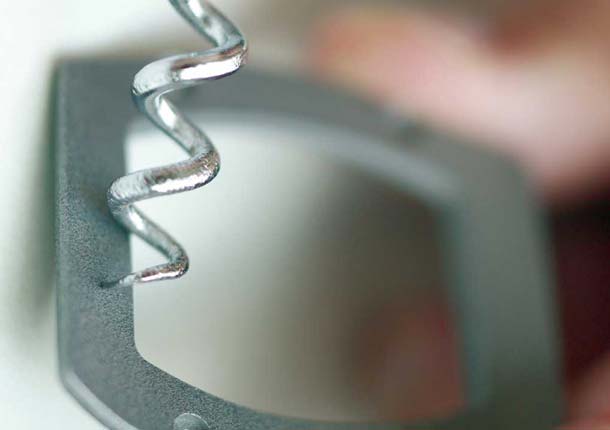
Attempts to scratch the case with a corkscrew or drop the watch on the concrete floor will leave absolutely zero signs of breakage or wear. For us, the RM 009 represents a revolution in luxury in that it is the first haute de gamme tourbillon that you can wear daily and not worry that it will show noticeable signs of wear. With RM 009, Richard Mille, who never compromises, has given the world a luxury that lasts forever.
Logic dictates that the lightest watch in the world will be the lightest movement in the world. Therefore, Mill decided to take the Caliber already existing in the lightweight RM 006 model and take it to a new extreme, skeletonizing it to the minimum architectural basis necessary to maintain a high level of impact resistance. At the same time, Mill was looking for new material with unprecedented ease, which he could use to create this mechanism. Mill set this task for one of the world’s greatest watch scientists, Giulio Papi.
At first, Papi was naturally attracted to Titan, but he wasn’t satisfied. The master explains: “We asked the metallurgical laboratory about the lightest and most resistant materials in the world, and they sent us a list. We were surprised that this list consisted exclusively of different types of aluminum. At first we were thrilled.” However, there was one problem. Papi explains that as aluminum ages, it becomes less resistant because its mass slowly turns into gas. Fortunately, Papi came across a compound called aluminum-lithium, which loses very little gas, leading to permanent fatigue with excellent stability, and it could be used in base platinum (unlike ALUSIC).
Aluminum lithium became the material for the mechanism board. Papi also used proprietary aluminum made by a brand called Anti-Corodal for the wheels of the mechanism. “This material is also lightweight, stable, and has the added advantage of creating very little friction,” he notes. Each of these special aluminum wheels must be electroeroded, not profiled.
Like ALUSIC, aluminum-lithium has never been used for any component of a watch before due to the huge costs involved in creating it. Giulio Papi tells us why: “At a certain temperature, aluminum and lithium change from liquid to solid, but these temperatures vary greatly. If you try to melt the two materials together at a normal temperature, aluminum will become solid and lithium will remain liquid, and nothing will come out.”
He adds, “The system for creating solids from aluminum and lithium involves putting them in a centrifuge so that the materials fuse at the molecular level.” Compression also creates a material that is extremely difficult to process. Giulio Papi compares the hardness of aluminum-lithium to “folded stainless steel.” Thus, the skeletonized plate should be created using CNC machining rather than electroerosion. Visible through the sapphire glass back cover, the RM 009 calibre features an aluminum-lithium base plate, the first in the history of watchmaking
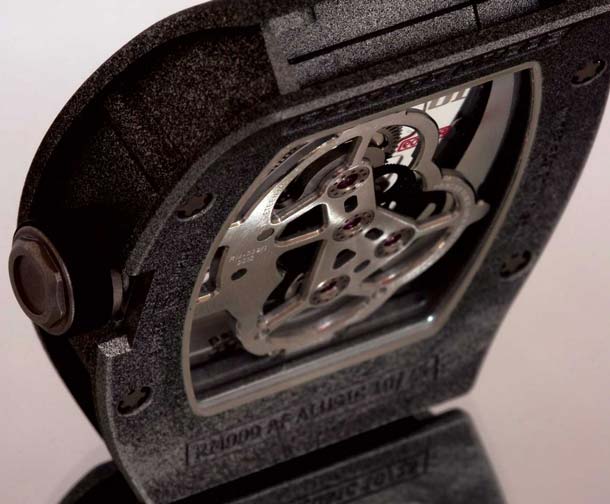
When processing most skeletonized mechanisms, the main focus is on creating a visual pattern, opening the mechanism to the owner’s eye, but in the RM 009 Caliber, the goal was much more functional. Giulio Papi’s goal was to remove as much material as possible in order to optimize the lightness of the mechanism while maintaining a high level of strength and impact resistance. This can only be achieved by rethinking the skeleton process. Instead of simply removing the material, Papi created separate bridges for the skeleton architecture, each of which included a technique for architecturally simplifying the use of box sections. To strengthen the plate from bending on the horizontal plane, Papi added additional “stiffeners”.


Categories
- A. Lange & Söhne
- Audemars Piguet
- Bovet
- Breguet
- Breitling
- Bvlgari
- Cartier
- Chanel
- Chopard
- Damiani
- De Bethune
- De Grisogono
- Diamond
- Frederique Constant
- Gerald Genta
- Girard-Perregaux
- Greubel
- Hublot
- IWC
- Jacob & Co.
- Jaeger-LeCoultre
- Louis Moinet
- Omega
- Panerai
- Parmigiani
- Patek Philippe
- Piaget
- Richard Mille
- Roger Dubuis
- Rolex
- TAG Heuer
- Ulysse Nardin
- Vacheron Constantin
- Van Cleef & Arpels
- Zenith
- Reviews
We use cookies to improve the website. By agreeing, you allow their use in accordance with our terms. More details in our Privacy Policy.
We respect your choice and will not use cookies without your consent.]
However, without cookies some website features may be limited. Cookies help:]
- maintain stable website operation;]
- analyze user behavior and improve service;]
- show personalized offers.]
If you change your mind, you can always update your decision. More details in our Privacy Policy]