No matter how deep the underwater abysses are, they open up a new horizon of possibilities for human achievement. To enter this still unexplored underwater world, you need the ability to withstand pressure at extreme depths.
The Deepsea Challenge watch is an adaptation of an experimental watch created for James Cameron, who sank to a depth of 10,908 meters on March 26, 2012.
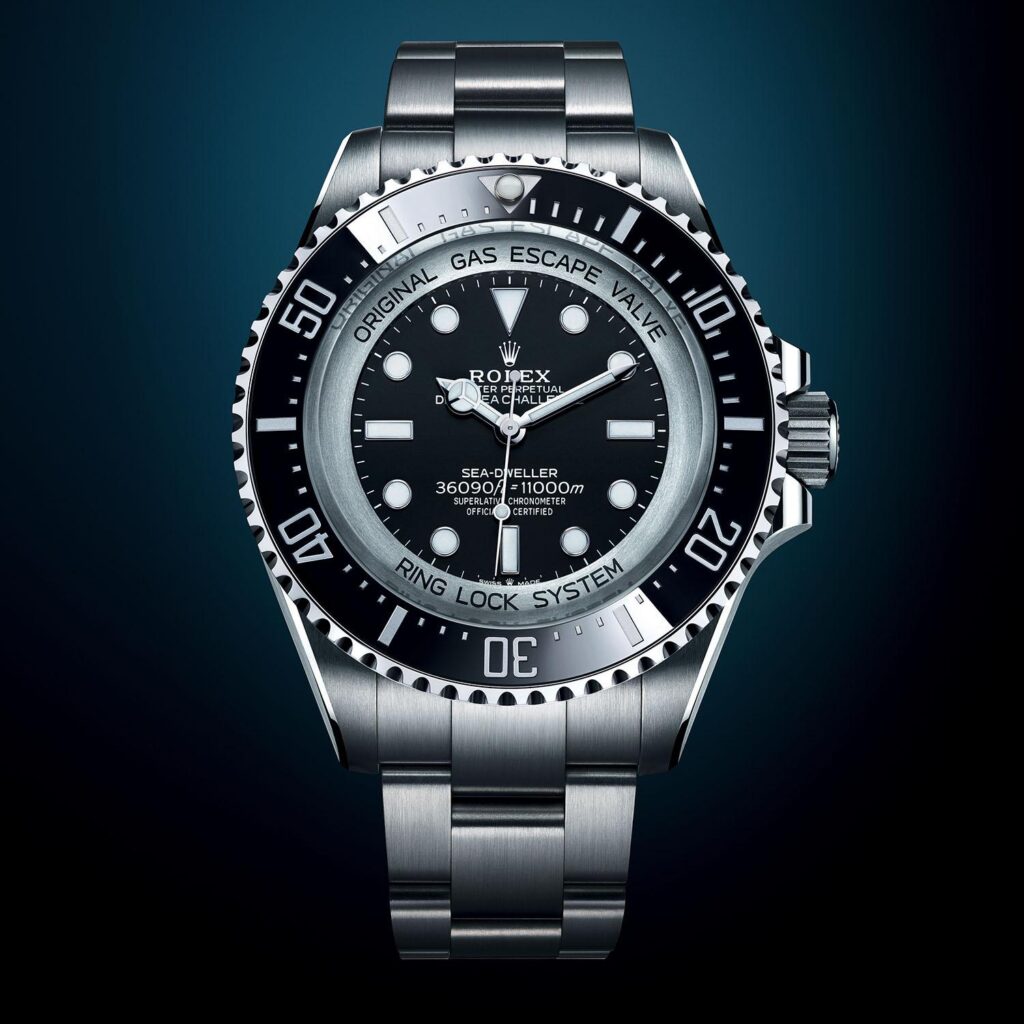
Titanium RLX – Strength and lightness
The category 5 titanium alloy selected by Rolex, titanium RLX— is distinguished by such qualities as lightness and resistance to deformation and corrosion.
The experimental 904L steel watch that accompanied James Cameron during his dive, which withstood enormous pressure at depth, was too heavy to wear on his hand. The use of RLX titanium to make the case and bracelet of the Deepsea Challenge watch helped reduce their weight by 30% compared to the experimental model for James Cameron. The satin finish on the case of the new watch — with the exception of the protrusions to protect the crown — and the bracelet is more pronounced. The upper edges were rounded and polished to emphasize the curve of the body ring arches.
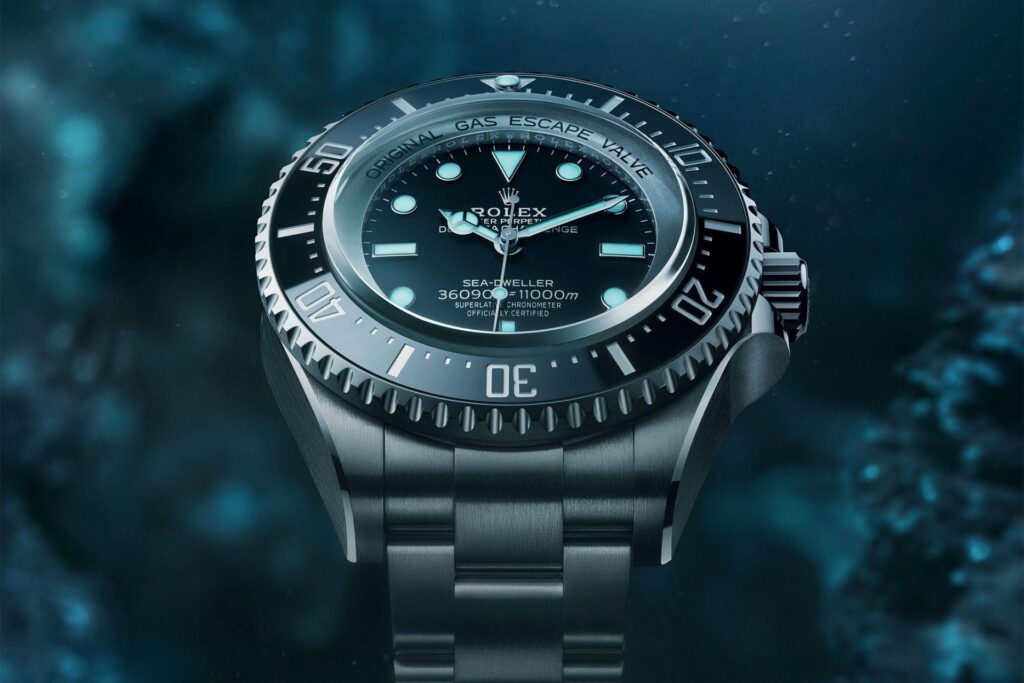
Ringlock system – Tame pressure at depth
The Rolex diving watch, designed for use at extreme depths, is equipped with a patented Ringlock system.
As a continuation of research to achieve the tightness of the Oyster case, this system is an improved case structure that includes a thick, slightly convex sapphire crystal, a high-strength compression ring made of nitrogen-alloyed steel, and an RLX titanium back cover. This design allows the Deepsea Challenge watch to withstand pressure at a depth of 11,000 meters, to which its water resistance is guaranteed. Rolex, together with Comex (Compagnie Maritime d’expertises, a marine expert company), has developed a special hyperbaric camera for monitoring the water resistance of Deepsea Challenge watches. In accordance with the requirements applicable to diving watches, each watch is tested with a safety margin factor of 25%, being subjected to simulated pressure that would prevail at a depth of 13,750 meters.
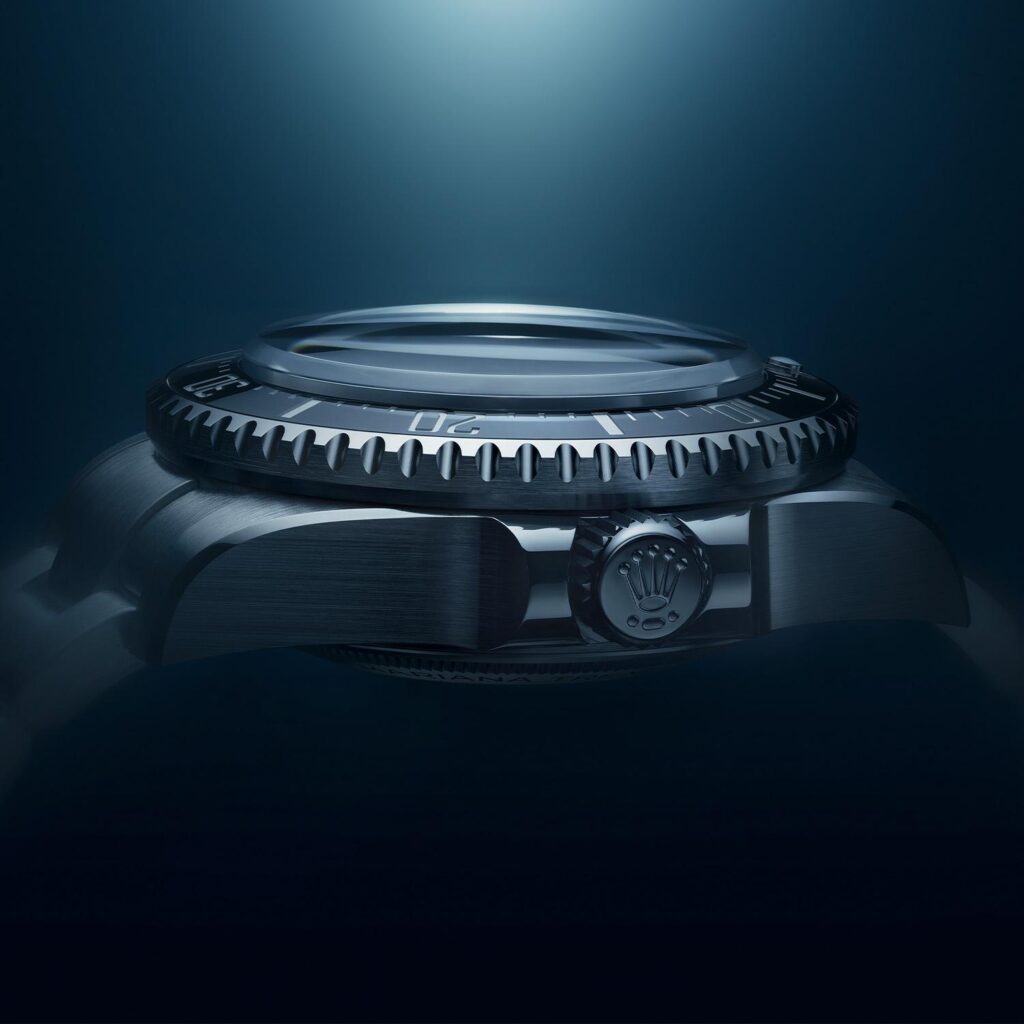
Helium valve – To victory over decompression
The helium valve was developed by Rolex to overcome the new limitations that diving watches are subject to during saturation diving.
While in underwater stations, the watch is gradually filled with helium, since the molecules of this gas, which is part of the breathing mixture used by divers in the pressure chamber, are so small that they easily penetrate the watch body, even through sealing gaskets. During decompression, when returning to the surface, helium may not always exit the watch case quickly, which can lead to damage or even glass squeezing out of the case. Developed by Rolex and patented in 1967, the safety valve is triggered automatically when the pressure in the housing becomes too high.
Caliber 3230 – Increased power reserve
Introduced in 2020, the caliber 3230 guarantees a power reserve of about 70 hours.
This was made possible by two key elements. Firstly, the thin-walled drum allows you to place an elongated, more energy-intensive spring in it. Secondly, the use of the patented Chronergy movement, made of a phosphorous-nickel alloy, makes it possible to achieve high energy efficiency and at the same time ensure reliable operation of the watch. It is also highly resistant to magnetic fields.

Crown Triplock – Increased water resistance
Released in 1970, the Triplock crown has two sealing zones inside the sleeve in which the crown is mounted, and a third zone in the crown itself.
The triple sealing system helps to increase the water resistance of the Rolex diving watch. The presence of the Triplock system in the watch is indicated by three dots on the crown of the crown, applied under the Rolex logo. The production of such a crown, a true technical masterpiece, requires the use of almost all the technological processes of the watch brand in this area.
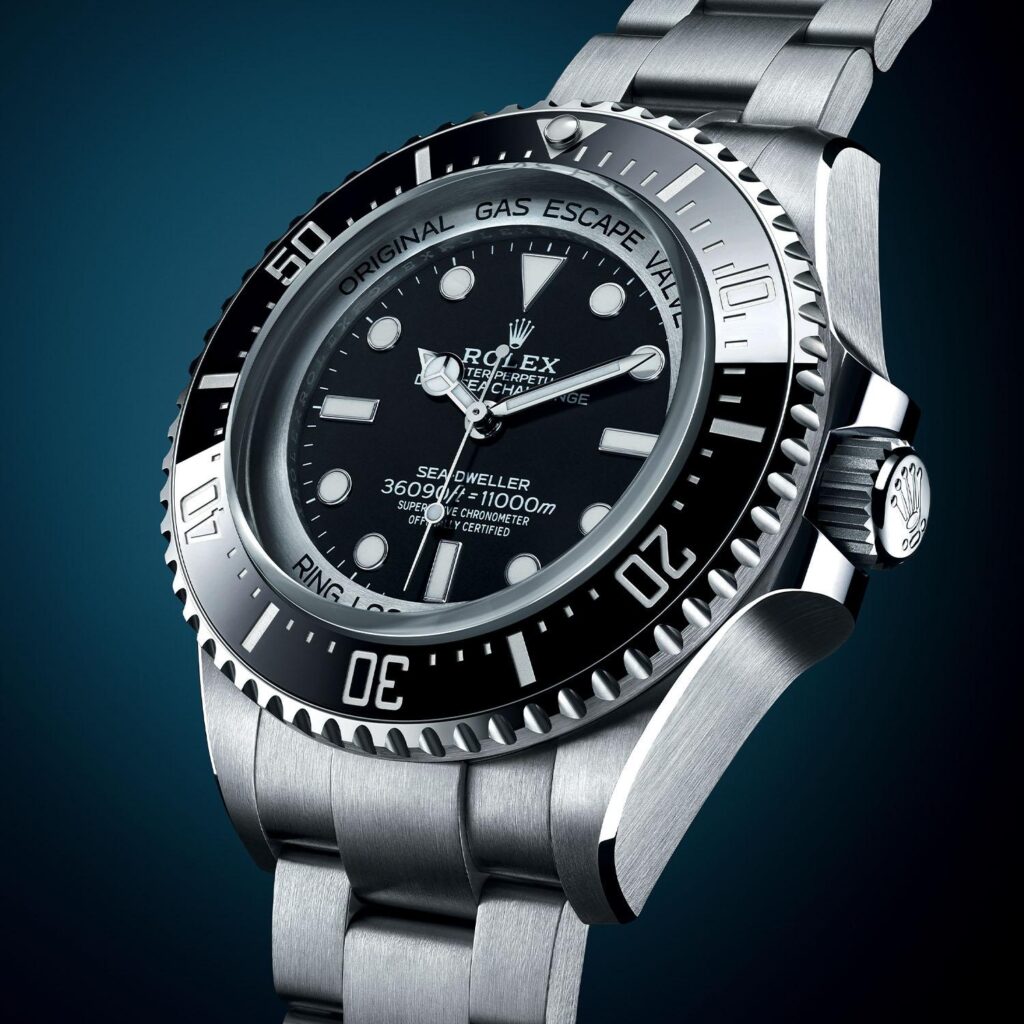
Wristband and extension systems – Easy adjustment
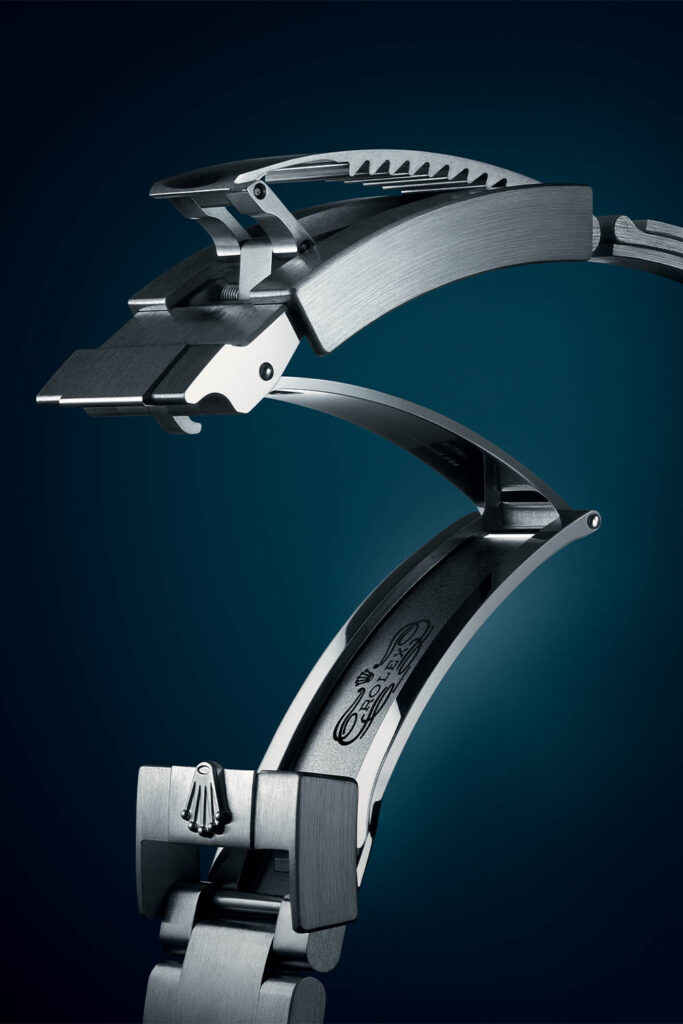
The innovative Rolex Glidelock and Fliplock extension systems do not require any tools to adjust the length of the bracelet.
Made of titanium RLX, the Oyster bracelet of the Deepsea Challenge watch is equipped with both Fliplock plates and the Rolex Glidelock system. The combination of two extension systems allows you to put the watch on a wetsuit up to 7 mm thick.
Single-direction rotating bezel – A guarantee of safety
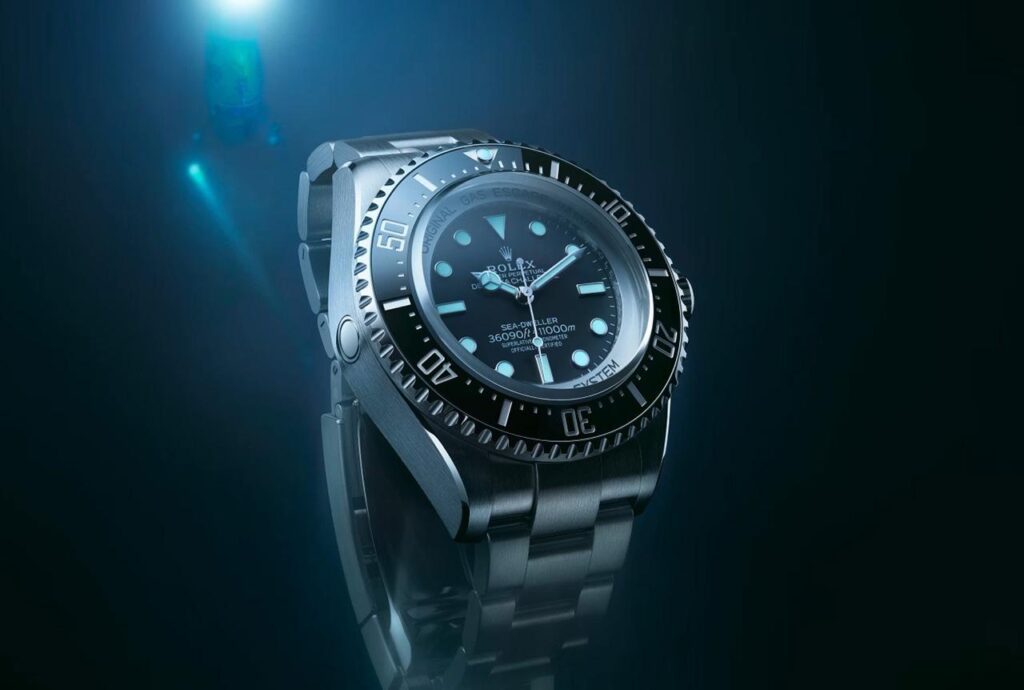
Equipped with a Cerachrom dial with a 60‑minute graduated scale, the bezel of the Deepsea Challenge watch rotates in one direction.
The disc provides good readability of dive time. The bezel, in turn, rotates only in one direction, which eliminates accidental rotation that can affect the dive time. Manufactured by Rolex, the patented bezel disc is made of high-tech black ceramic. It is almost impossible to scratch it, and its color, resistant to UV rays, does not change over time.
Chromalight display – Unsurpassed readability of readings
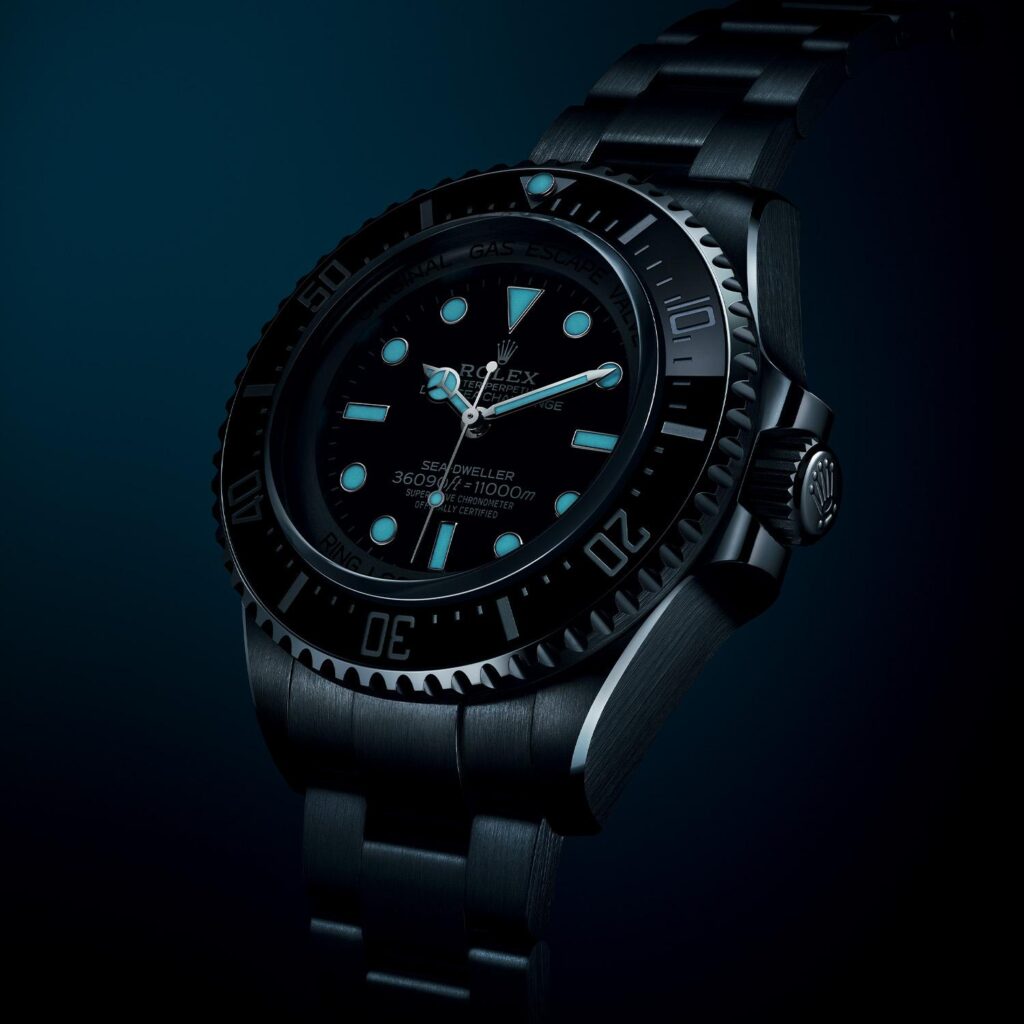
Used exclusively by Rolex and introduced in 2008 in Rolex Deepsea watches, the display Chromalight is characterized by a luminescent substance applied to the hands, hour markers and the bezel of the rotating bezel.
A substance consisting of aluminum, strontium, dysprosium and europium with a characteristic blue glow was obtained as a result of a complex and painstaking manufacturing process. It is characterized by a longer and more intense glow, significantly exceeding the established standards in the field of watchmaking.


- A. Lange & Söhne
- Audemars Piguet
- Bovet
- Breguet
- Breitling
- Bvlgari
- Cartier
- Chanel
- Chopard
- Damiani
- De Bethune
- De Grisogono
- Diamond
- Frederique Constant
- Gerald Genta
- Girard-Perregaux
- Greubel
- Hublot
- IWC
- Jacob & Co.
- Jaeger-LeCoultre
- Louis Moinet
- Omega
- Panerai
- Parmigiani
- Patek Philippe
- Piaget
- Richard Mille
- Roger Dubuis
- Rolex
- TAG Heuer
- Ulysse Nardin
- Vacheron Constantin
- Van Cleef & Arpels
- Zenith
- Reviews