A series of models with illustrations to the most striking exploits of Hercules in honor of the 270th anniversary of Vacheron Constantin.
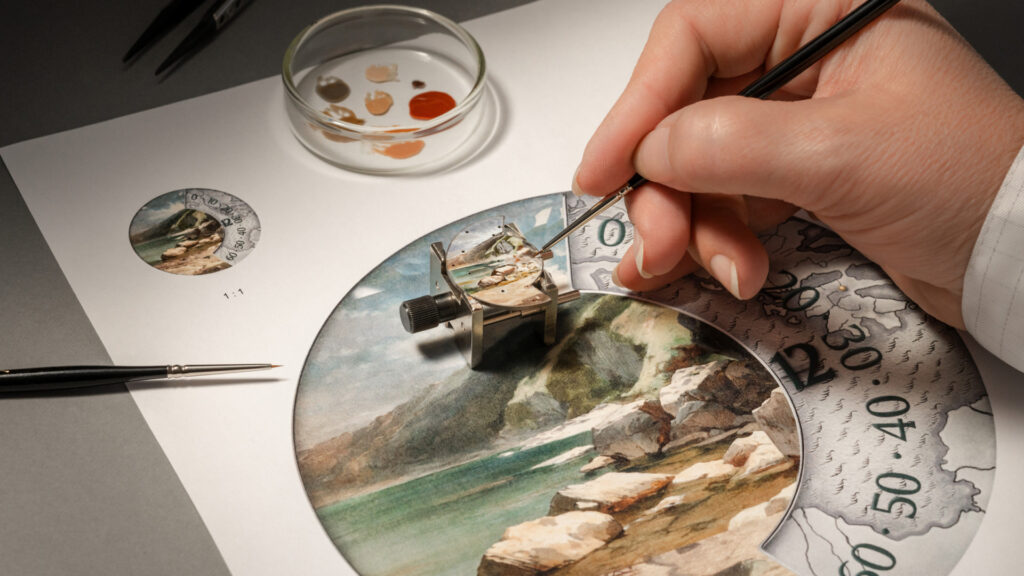
As part of the brand’s 270th anniversary, Vacheron Constantin has released a series of sophisticated watches in the Les Cabinotiers collection. One of them bears the telling name “The Labours Of Heracles”. With the help of such craft techniques as hot enamel, miniature painting and microsculpture, this series tells about the 4 most striking feats of the half-human demigod Hercules.
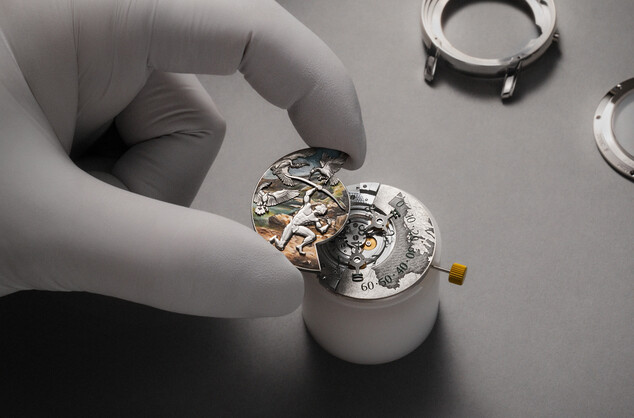
The dial consists of 2 white gold plates, one of which partially overlaps the other. The plate on the bottom right side is decorated with a pattern that reproduces a map of 17th century Greece. The areas with water on the map are depicted using hand-engraved and enameled: colorless at a distance from the coast and gray along the coastline to mark the contours of the continents.
The continents are made using the hot enamel technique (4 stages of firing at temperatures from 800 to 900 ° C). To form the desired relief and texture, the enamel is engraved (small incision technique). An interesting detail: a miniature cabochon made of polished yellow gold marks on the map the place where the feat stated in the model name was performed.
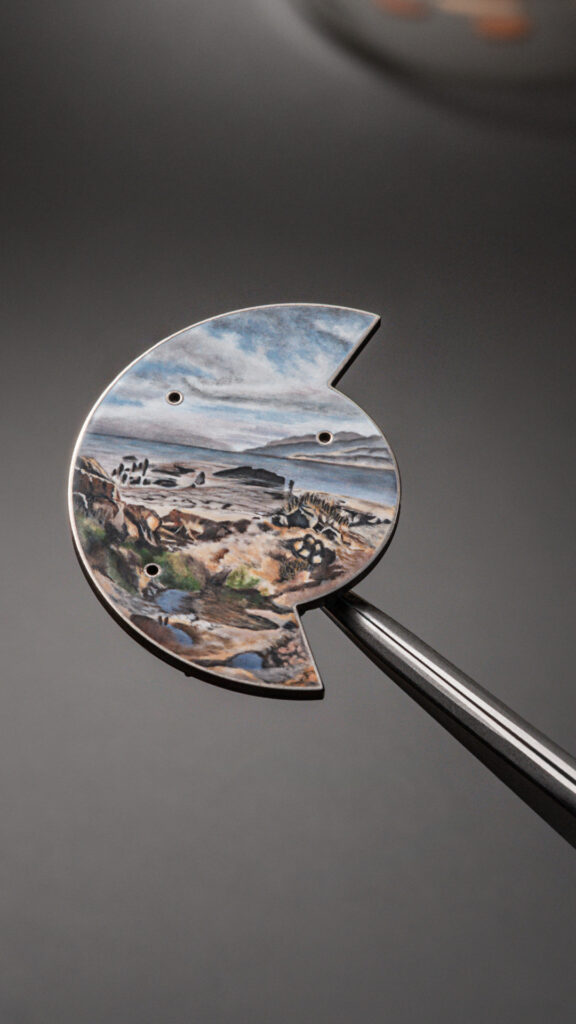
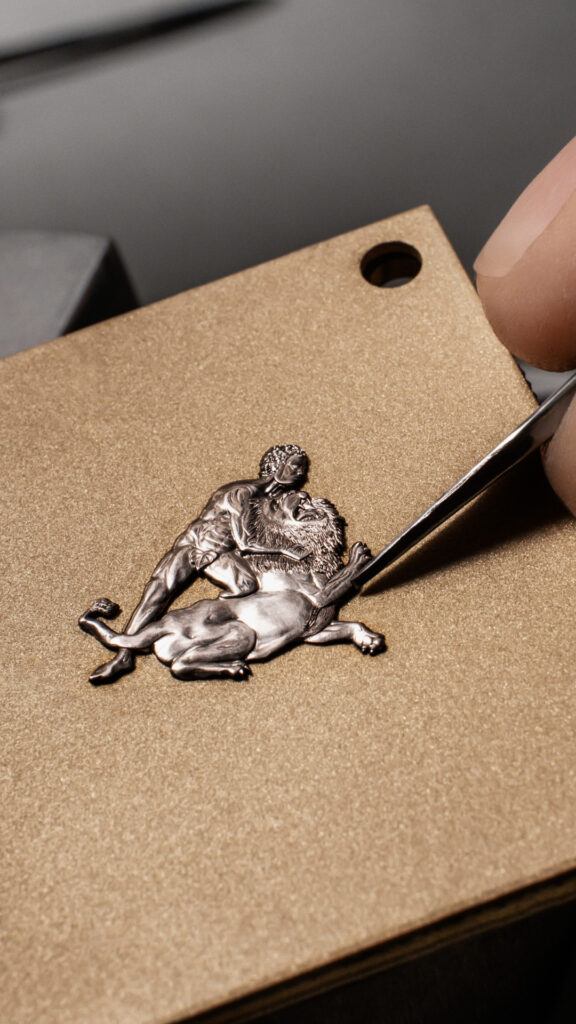
The top plate on the left side of the dial is dedicated to the feat itself. The figure of Hercules is a three-dimensional sculpture made of white gold, and the background is made using miniature painting techniques. Although the sculpture itself is only 0.5 mm thick, the smallest details are carefully engraved here. Whether it’s the musculature, facial features, or hair of Hercules. With the same care, the engraver approached the decoration of the fur, scales and feathers of those terrible monsters that Hercules is fighting.
These four are united by the principle of wandering or satellite indication. The module integrated into the ultra-thin automatic caliber 1120 AT is responsible for it. The satellite display is based on a clock wheel with 3 beams, each of which has a carousel with 4 digits. The figure of the current hour slides along a fixed minute scale in 10-minute increments located on the right side of the dial. The numbers change at the end of each hour.
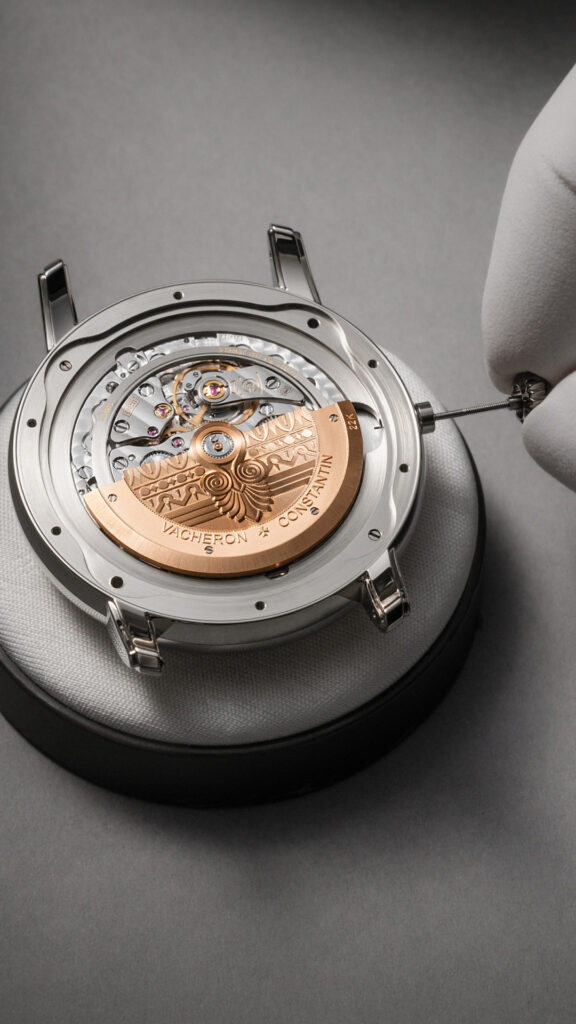
The mechanism is powered by a patented system in the iconic Maltese Cross shape for Vacheron Constantin. The mechanism features a 22-carat gold rotor decorated with a tapisserie guilloche pattern. The latter is inspired by Greek frescoes and is handmade on a guilloche machine created back in 1904.
The Labours of Heracles – Nemean Lion
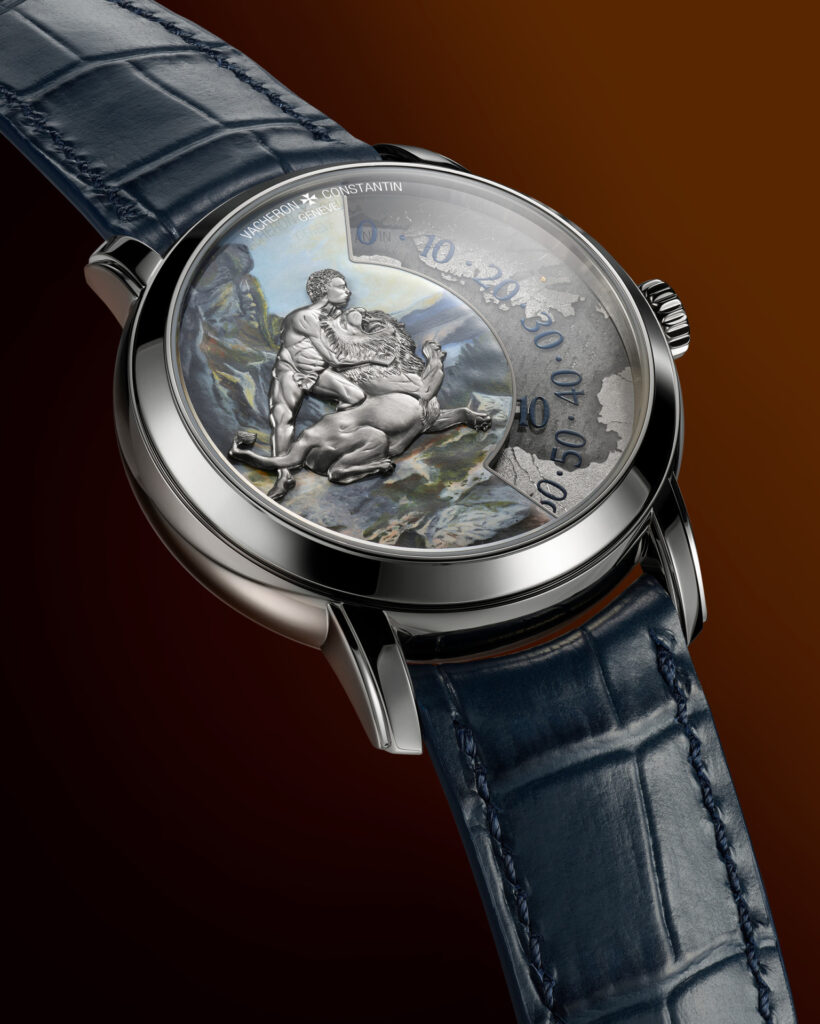
Hercules’ first feat was to kill the Nemean lion, whose hide was invulnerable to any weapon. Realizing that his shooting skills were powerless against the terrifying beast, Hercules chased the lion into a cave, grabbed it by the neck and strangled it. He made himself a cloak from the skin of the slain monster, which he wore all his life as protection and a symbol of his bravery.
The Labours of Heracles – Lernaean Hydra
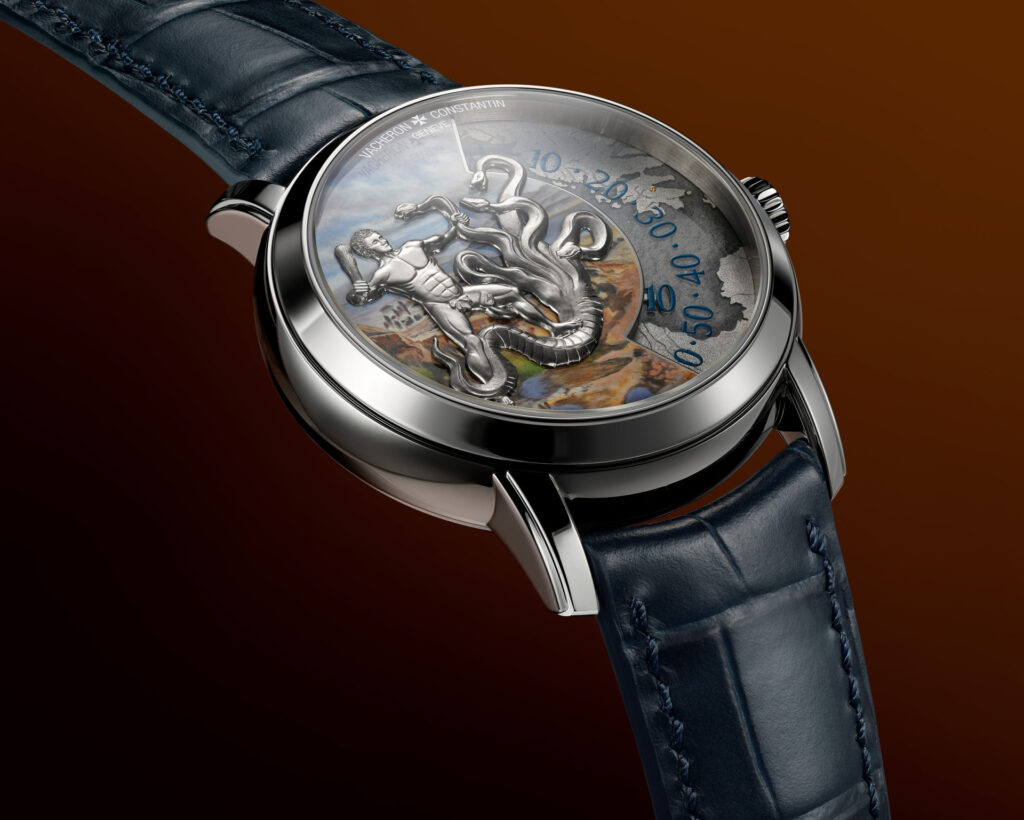
The second feat of Hercules was the killing of the Lernaean Hydra. Hydra was a multi-headed snake-like monster created by the goddess Hera to kill Hercules himself. It turned out to be almost impossible to kill the Hydra, because 2 new ones grew in the place of each severed head. Then Hercules cauterized the wounds in place of the severed heads, thereby stopping their endless growth. When he reached the immortal head of the monster, he chopped it off and buried it under a huge stone, after which he dipped the tips of his arrows in the poisonous blood of the Hydra.
The Labours of Heracles – Stymphalian Birds
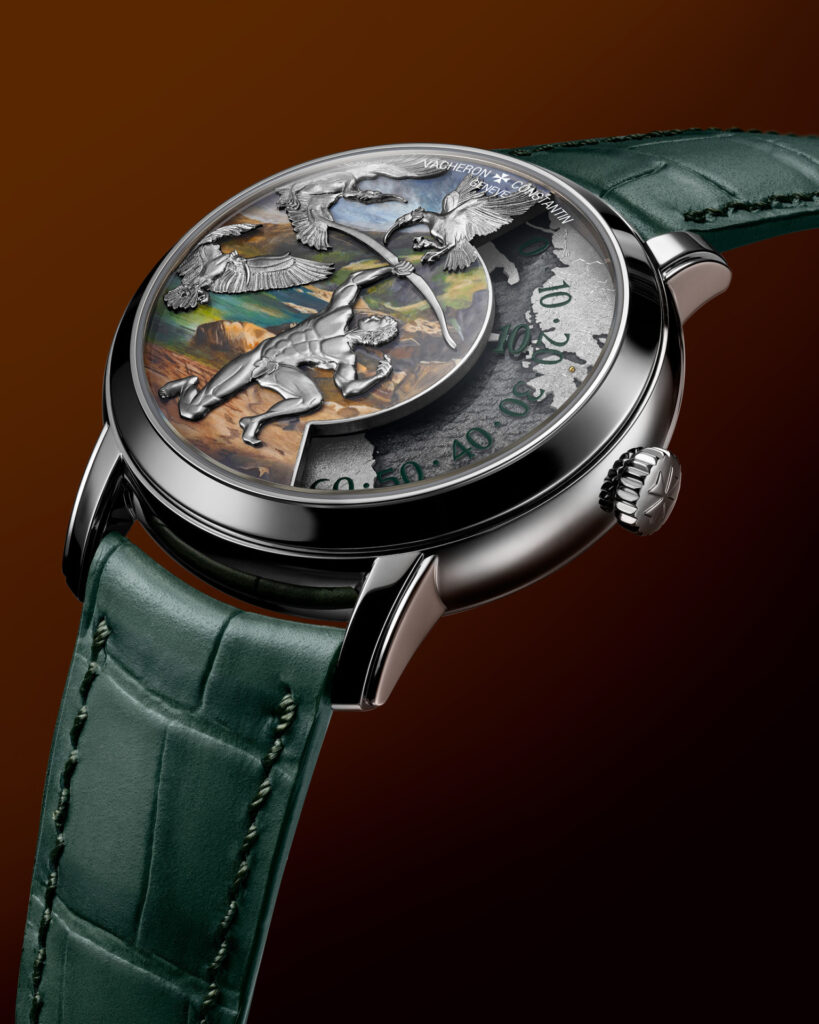
The dial of this model depicts the third feat of Hercules or the Stymphalian Birds. According to the story, King Eurystheus ordered Hercules to clear the city of Stymphalus from a huge flock of aggressive man-eating birds gathered in the swamps around Lake Stymphalia. These birds possessed bronze claws and beaks that pierced through the armor of warriors, as well as feathers that they threw like arrows to hit their prey.
Realizing the complexity of the task, the daughter of Zeus, the warrior goddess Athena, gave Hercules two copper tympanums forged by the god Hephaestus. Hitting the tympanums, Hercules scared the birds away, causing them to fly up in a flock over the forest. After that, he grabbed his bow and struck the birds with deadly arrows, the tips of which were soaked in the poison of the Lernaean hydra.
The Labours of Heracles – Cretan Bull
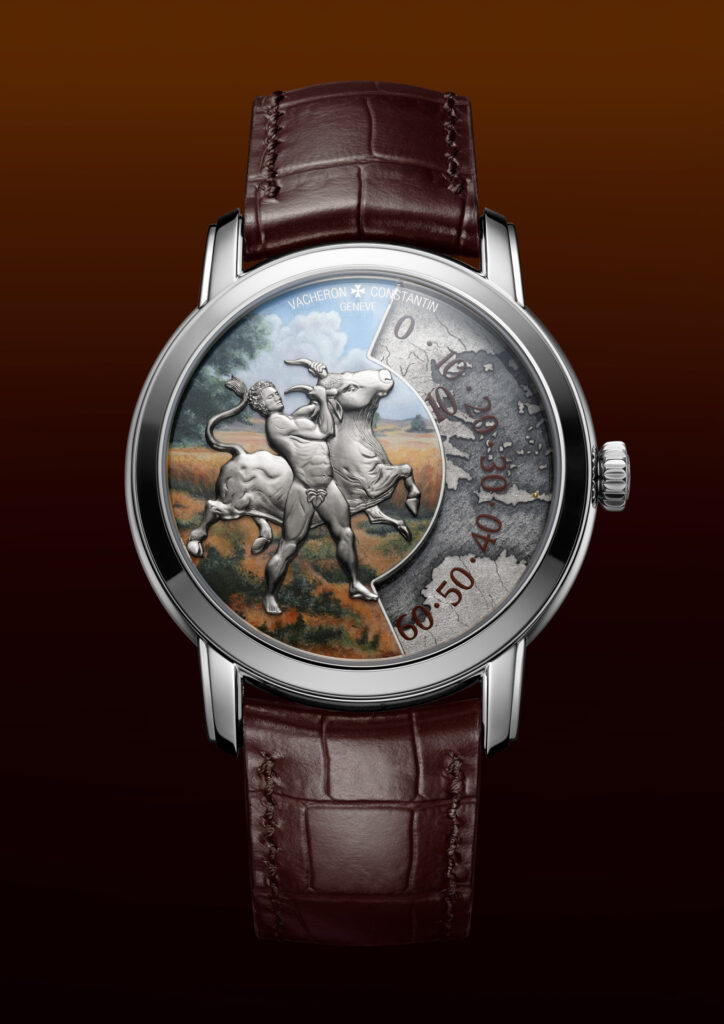
The Cretan bull (the 7th feat of Hercules) was sent to King Mios of Crete by the god Poseidon on the condition that the king had to sacrifice the bull. When Minos did not fulfill the contract, the enraged Poseidon transferred his anger to the bull, who rushed to devastate the fields and destroy the cities. Hercules, who arrived in Crete, grabbed the bull, knocked it to the ground and brought it to King Eurystheus. According to legend, Eurystheus was so frightened by the bull that he ordered a large bronze jug to be made in which he could hide from the monster.

- A. Lange & Söhne
- Audemars Piguet
- Bovet
- Breguet
- Breitling
- Bvlgari
- Cartier
- Chanel
- Chopard
- Damiani
- De Bethune
- De Grisogono
- Diamond
- Frederique Constant
- Gerald Genta
- Girard-Perregaux
- Greubel
- Hublot
- IWC
- Jacob & Co.
- Jaeger-LeCoultre
- Louis Moinet
- Omega
- Panerai
- Parmigiani
- Patek Philippe
- Piaget
- Richard Mille
- Roger Dubuis
- Rolex
- TAG Heuer
- Ulysse Nardin
- Vacheron Constantin
- Van Cleef & Arpels
- Zenith
- Reviews