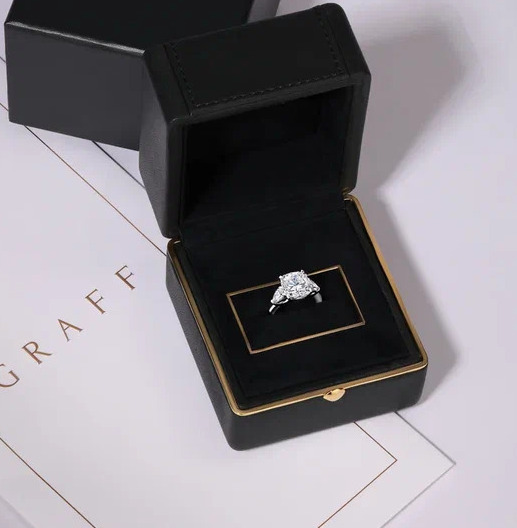
Pawn diamonds: a loan secured by precious stones within minutes

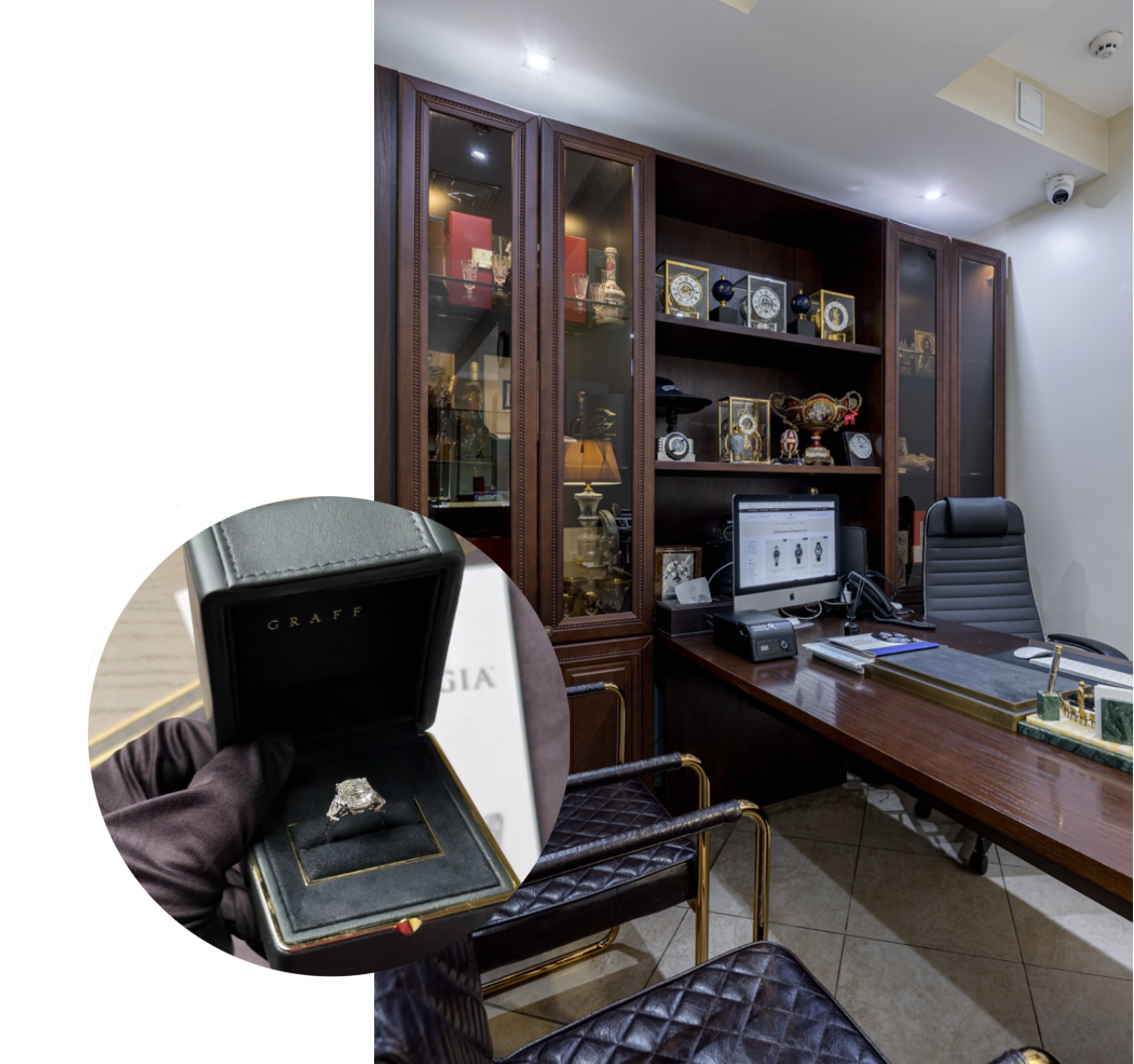
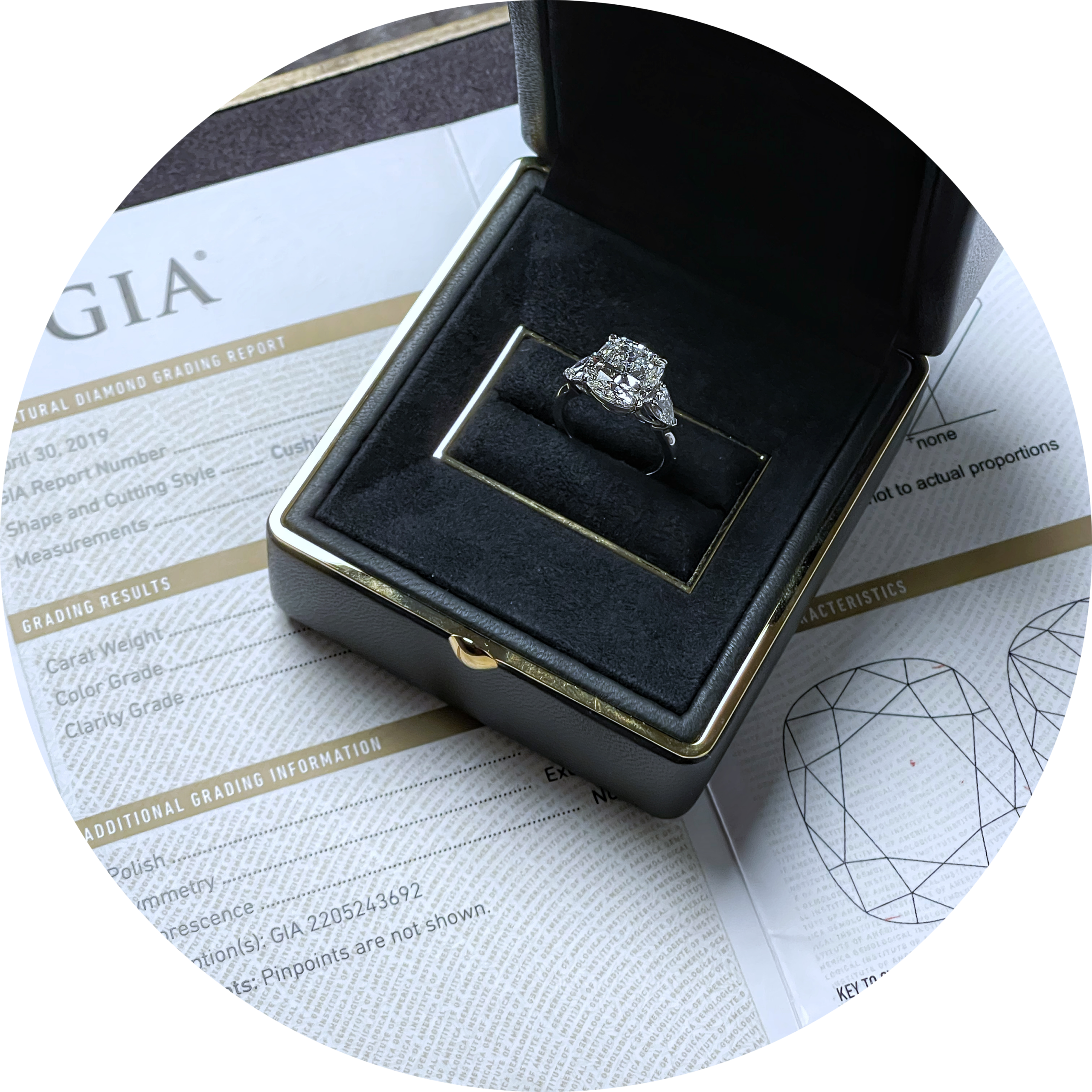
We lend money with no limit on the amount against diamonds and precious stones — stones set in jewellery with GIA, IGI, HRD, AGT and other laboratory certificates. The stone is appraised by a gemmologist, not by a merchandise appraiser going by the weight of the piece.

Authenticity and certificate match check. We identify the stone in front of you.
A preliminary appraisal from the certificate data before you come in.
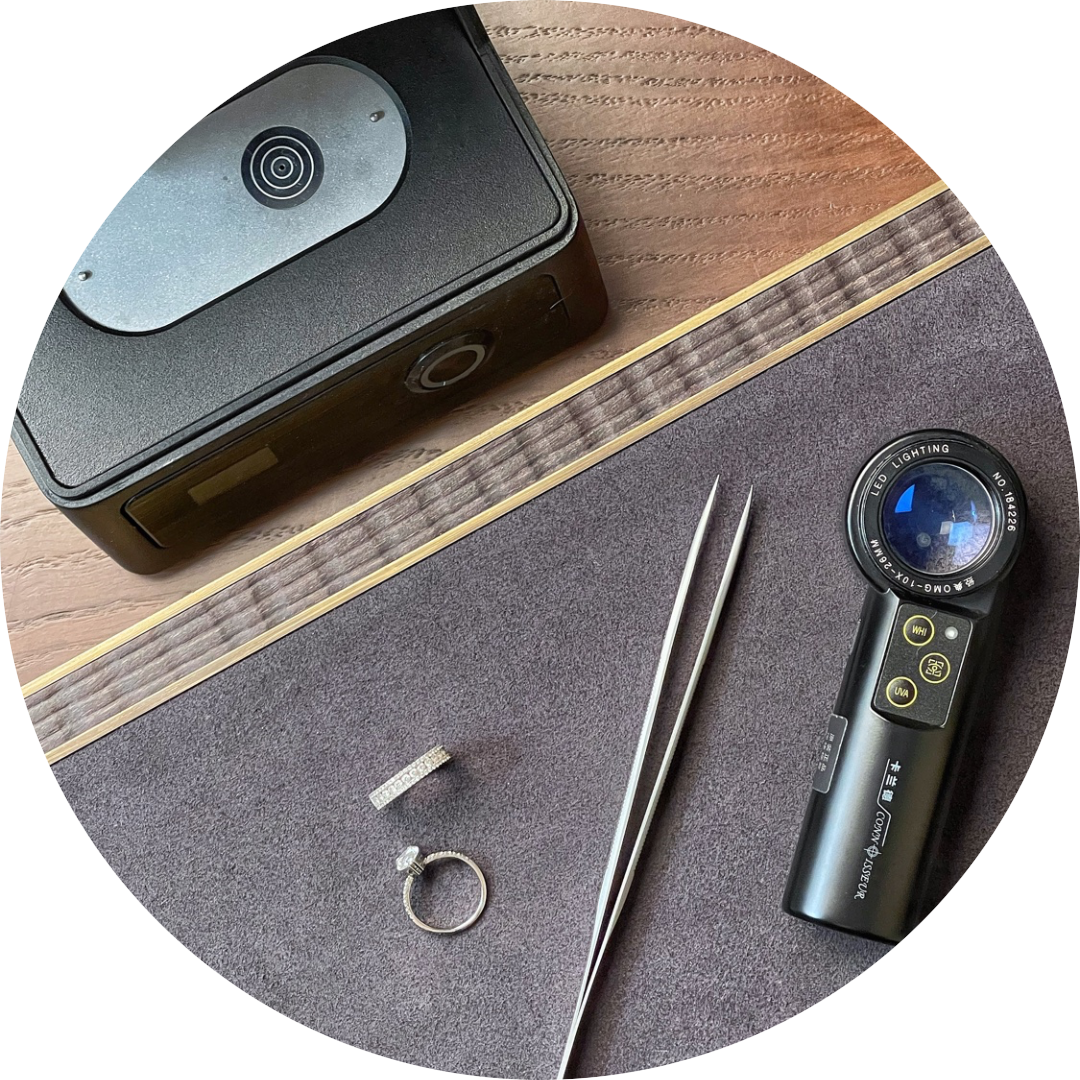
Gemmologist. Professional equipment
No limit on the amount
Free insurance of the pledged property
Only a passport is needed for the agreement

Why diamond owners trust us

Why diamond owners trust us

Why diamond owners trust us

  • The inspection is carried out by a gemmologist, not a merchandise appraiser, which guarantees a fair appraisal of your stone.
  • We work with GIA, IGI, HRD, AGS, MSU and MGL certificates.
  • We check the stone's origin with professional equipment. We do not work with lab-grown stones.
  • An officially licensed pawnshop listed in the state register of the Bank of Russia; the agreement complies with Federal Law No. 196-FZ.
value

Two figures worth telling apart: the appraised value and the loan amount

The appraised value is what the gemmologist has valued your stone at. The loan amount is what you receive in hand; it is a percentage of the appraised value. We tell you both figures before the agreement is signed.

Why the percentage for gold is higher than for a diamond. Gold is an exchange-traded commodity with a daily quote and instant liquidity: it can be sold any day at a known price. A diamond is a unique item, and finding a buyer takes weeks. This gap in liquidity is the reason for the different percentage.

What raises the loan amount. The round Kr-57 cut — the most liquid shape, high colour and clarity grades, and the absence of defects.

Which diamonds you can pawn with us

We accept natural diamonds of various cuts, weights and quality grades as collateral — from small stones to rare large ones.
By weight
  • We accept diamonds of various weight categories as collateral — from small stones to large and rare ones.
By cut
  • Round brilliant (Kr-57), oval, pear, marquise, princess, emerald, radiant, cushion, Asscher, baguette, heart, as well as old and non-standard cuts.
By colour
  • Diamonds from colourless to distinctly tinted (D–Z scale), as well as natural fancy-colour diamonds: yellow, pink, blue, green and others.
By form
  • Precious stones set in jewellery: rings, earrings, pendants, bracelets and other pieces. A gemmological report (a certificate for the stone) is required for the pledge.

How to pawn a diamond: 4 simple steps

1. Online appraisal Send photos of the diamond and its certificate via the form on the website or in a messenger of your choice. Our specialists will review the information and give you a preliminary appraisal.
2. Visit to the office We invite you to the Privilegia pawnshop office. We recommend arranging the time of your visit in advance so that the specialist can give you the attention you need.
3. Gemmologist's appraisal The specialist will inspect the diamond, check its characteristics and compare the results with the certificate. The appraisal takes place in your presence.
4. Paperwork and payment Once the appraisal is complete, we will offer you a loan amount and explain the terms of the deal. If you accept them, the agreement is signed and the money is paid out.

Have a certificate? We will name the loan amount from its characteristics — no need to come in!

Get an appraisal
How we work with precious stone pledges
Individual terms for every deal
The rate and term are calculated individually — based on the stone's characteristics, the loan amount and the term.
Confidential and secure deals
The deal is governed by Federal Law No. 196-FZ “On Pawnshops”. Client data is not passed on to the tax authorities or any other third parties.
A transparent agreement with no hidden fees
The terms are set out in the pawn ticket. All terms are agreed before the agreement is signed.
Minimum paperwork
Only a passport is needed to arrange the pledge.

Express online appraisal in a few minutes

Why us, not a bank or an ordinary pawnshop

Criterion
Our pawnshop
Bank loan
Ordinary pawnshop
Who appraises the stone Gemmologist — Merchandise appraiser
Gemmological appraisal Yes — No
Speed 20–40 minutes 3–7 days 30 minutes
Documents Passport Certificates, bank statements Passport
Credit history Not required Required —
Fancy shapes and coloured stones Accepted — Often refused
Insurance At our expense, for the appraised value — As per regulations

Expertise and security

Insured vault: individual storage, video surveillance, security.
An officially licensed pawnshop in the Central Bank register, an insurance policy, a pawn ticket under Federal Law No. 196-FZ.
Gemmologist's equipment: microscope, 10× loupe, tester, UV lamp, Alrosa detector, polariscope.
The gemmologist checks the stone's origin (natural or synthetic) and its match with the certificate.

Our customers' reviews

Frequently asked questions about pawning diamonds

How much can I borrow against a 1-carat diamond?
One-carat stones can differ in price several times over: a stone of colour D with IF clarity and a stone of the same weight in colour K with SI2 clarity are items of fundamentally different value. The loan amount is calculated as a percentage of the appraised value of the specific stone. Give us the characteristics or the certificate number — we will name a preliminary figure within minutes.
Why is a higher percentage of the appraised value lent against gold than against a diamond?
Because of the difference in liquidity. Gold is an exchange-traded commodity with a daily quote; it can be sold any day at a known price. A diamond is unique, and finding a buyer takes weeks. This risk is what the percentage reflects. At the same time, the appraised value of a good stone is usually higher than that of a gold item of comparable weight.
Does a certificate affect the loan amount?
Yes, noticeably. A GIA, IGI or HRD certificate gives a clear picture of the characteristics and therefore removes part of the collateral risk — pawnshops lend a higher percentage of the appraised value against such a stone. Our pawnshop only accepts diamonds with certificates as collateral.
Do I need to take the stone out of its setting?
No. As a rule, the setting allows us to see the number inscribed on the stone's girdle through a microscope and to carry out the appraisal.
Do you accept stones without a certificate?
No. We only accept diamonds with certificates, set in jewellery, as collateral.
Do you accept lab-grown diamonds?
No. We accept only natural precious stones.
Do you accept fancy-colour diamonds?
Yes: yellow, cognac, pink, blue, green and black. Fancy colours have their own scale — what is assessed is the intensity and purity of the hue. A certificate is also required for such stones: it confirms the natural origin of the colour, which is the key parameter.
Can I pawn loose stones or a parcel of small stones?
No. We only accept certified diamonds set in jewellery as collateral.
What happens to the stone if I do not redeem it on time?
After the agreement expires, a one-month grace period applies: during it the stone cannot be sold, and you can redeem it or extend the agreement. The stone is kept in an insured vault the whole time. If it is not redeemed and the agreement is not extended, the stone is sold to repay the loan. Returning the stone to its owner always comes first — we remind you in advance when the deadline is approaching.
Can the repayment period be extended?
Yes. To extend it, you only need to pay the accrued interest.
How is pawning different from selling the stone?
A pledge is a loan: ownership stays with you, and the stone is returned once the debt is repaid. A buyout is a final deal: the stone becomes ours, and the money is yours to keep. The buyout amount is higher than the loan amount because you do not take the stone back.
Is there a limit on the loan amount?
No. If the stone is worth it, the amount is not limited. We pay out large sums in cash on the day you come in.

Diamond pledge — money against your stone without selling it

A diamond is the most compact way to store significant value. That is exactly why it remains a convenient collateral asset: the stone does not wear out, needs no maintenance and does not lose its properties while in storage, and you can get money against it as quickly as against any other collateral — without income statements, guarantors or credit history checks.

Why a diamond is a convenient collateral asset

A stone has properties that neither a car, nor electronics, nor even a watch have. It does not age: a diamond that has spent three months in a vault is physically identical to what it was before — it needs no servicing, winding or charging, and it does not lose value from sitting idle. It is compact: a value that in another form would require a separate room fits into an envelope, which makes storage cheaper and safer.

The flip side of this compactness is that identification is harder. That is why the question “how will I know it is my stone” matters more here than when pawning any other property — and why a serious pawnshop answers it with a procedure, not a promise.

What affects the loan amount against a diamond

The loan amount is a percentage of the appraised value, and different things affect each of the two figures. The appraised value depends on the stone's characteristics: carat weight with its thresholds, colour, clarity, cut quality, fluorescence, natural or laboratory origin, and any treatment. The percentage depends on liquidity: how quickly the stone can be sold if it is not redeemed.

Hence some consequences that are rarely explained. A certificate from a reputable laboratory raises not the appraised value but the percentage: it confirms the characteristics independently of the pawnshop. A round Kr-57 cut gets a higher percentage than a marquise or a heart of the same weight and quality — simply because it sells faster. And a lab-grown stone gets a lower percentage not because of its quality, which can be excellent, but because its market is falling.

Pawning a stone is not selling it

The fundamental difference is that ownership stays with you. At the end of the agreement, or at any time before that, you repay the loan with interest and take your stone back.

If you change your mind about redeeming the stone, you can simply not extend the agreement — this creates no additional obligations.

Find out the loan amount you can get against your stone
Have a certificate? We will name the amount from its number within minutes
Get an estimate

How to find us

Kutuzovsky Avenue, 30
How to find us
Hours
Daily from 10:00 to 20:00

We use cookies to improve the website. By agreeing, you allow their use in accordance with our terms. More details in our Privacy Policy.

We respect your choice and will not use cookies without your consent.]

However, without cookies some website features may be limited. Cookies help:]

If you change your mind, you can always update your decision. More details in our Privacy Policy]